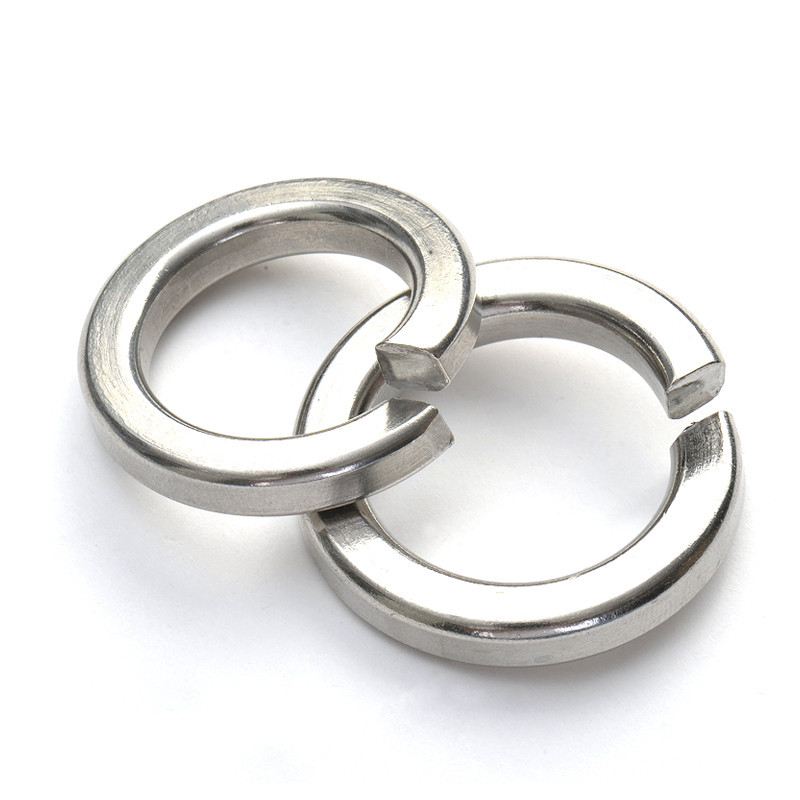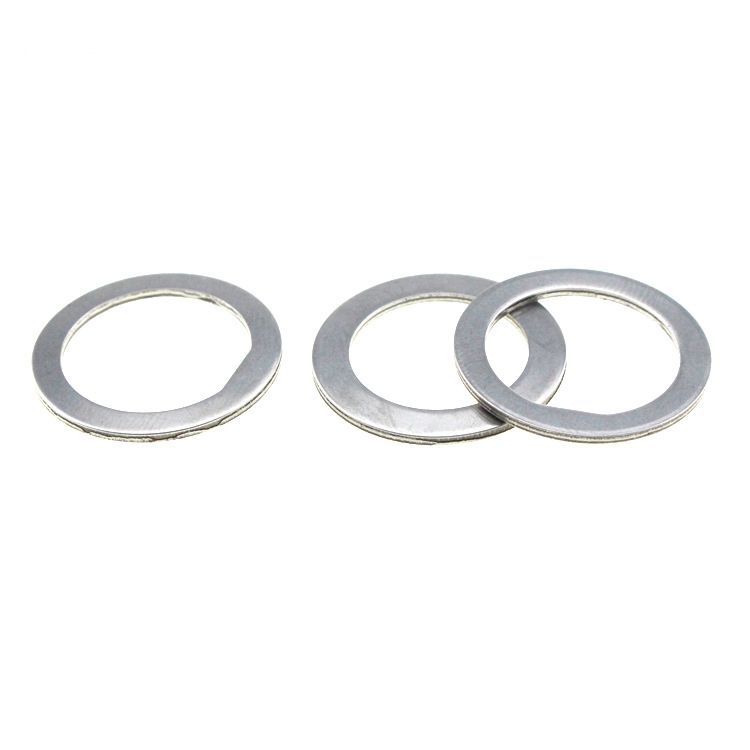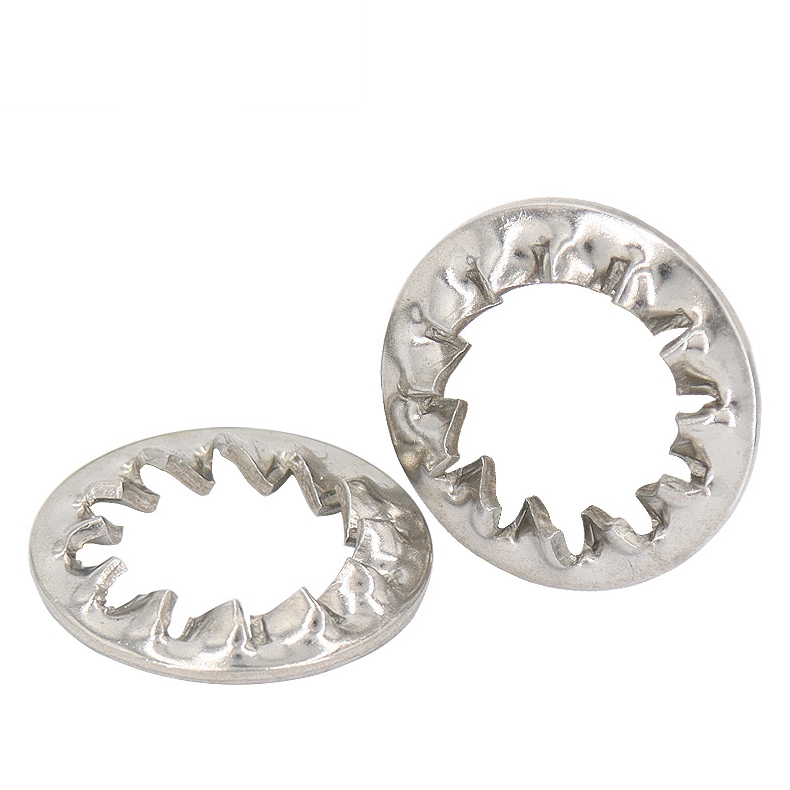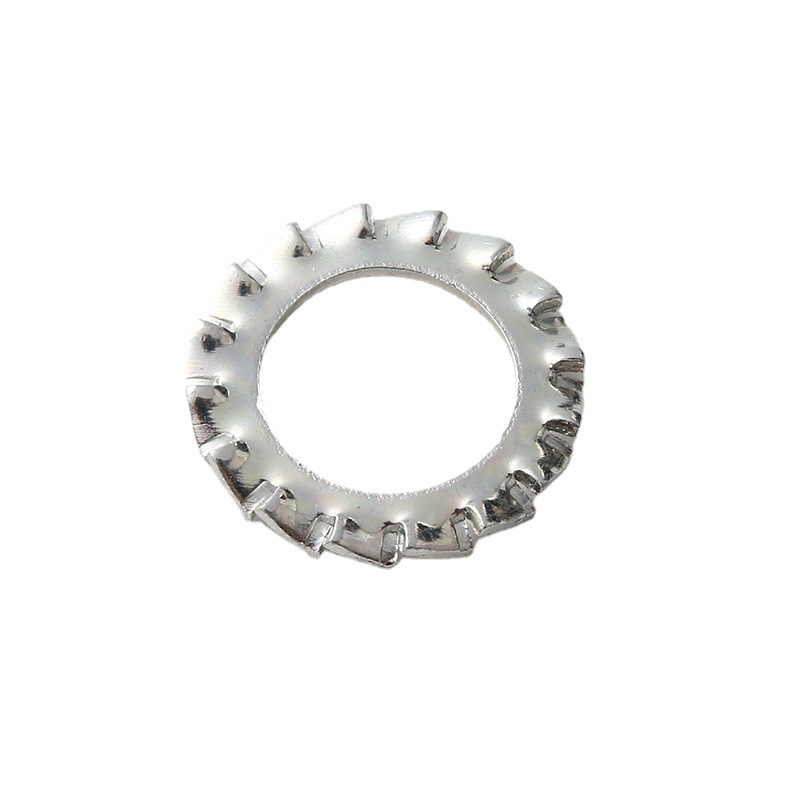
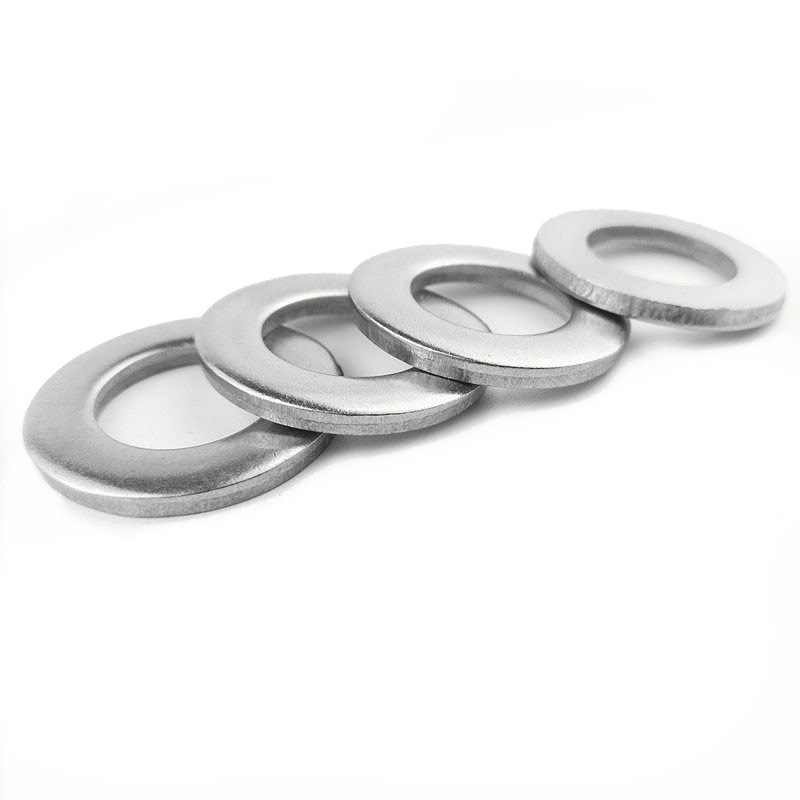
Detailed explanation of washers materials, classification and uses

stainless steel washers

1. Definition and types of washers

Washers are commonly used parts in fasteners, which have the functions of dispersing locking force, protecting the surface of the connection from damage, and compensating for looseness.

In mechanical manufacturing, washers are a commonly used connection part. It is usually made of metal or non-metallic materials and is used to fill the gap between the connecting bolts and nuts to increase the connection strength and tightening force. Whether in manufacturing, repairing machinery, or DIY enthusiasts, washers play a very important role.

2.Material and size of washers

The materials of washers mainly include metal, rubber, plastic, fiber, etc., among which metal washers are the most widely used. Metal washers can be divided into various types such as steel, stainless steel, copper, aluminum, iron, etc. according to different materials.

The sizes of washers are also varied, and the common parameters are inner diameter, outer diameter, thickness, etc. They are manufactured according to the standards of different countries or user needs.

3. Purpose of washers

Washers are commonly used in the following situations:

  • Insufficient tightening force of fasteners.
  •  Uneven fastening surface.
  •  Looseness or vibration between fasteners.
  • .Prevent corrosion and wear.

4. Classification of washers

Depending on the material, washers can be divided into metal washers, rubber washers, plastic washers, fiber washers and other types.

Picture of Dongguan Aotuo

Dongguan Aotuo

Get In Touch
Welcome To Share This Page:
Product Categories
Latest News
Get A Free Quote Now !
Contact Form Demo (#3)

Related Products

Related News

1. Introduction: Understanding Breaking Torque in Fasteners In the fastener industry, breaking torque (also known as failure torque or torsional strength) is one of the most critical mechanical properties that

Introduction In industrial control cabinets, server racks, telecommunications equipment, instrument housings and electronic panel assemblies, engineers frequently need fasteners that enable repeated, tool‑free or screwdriver‑operated

Introduction In modern sheet‑metal chassis manufacturing, control‑panel assembly, electronic‑enclosure production and cabinet fabrication, mechanical engineers are frequently tasked with creating precise, fixed spacing gaps between

1. Introduction: A Puzzling Phenomenon One of the most frequently encountered—and most misunderstood—phenomena in the fastener industry is the magnetism exhibited by stainless steel fasteners. Procurement

Introduction In mechanical assembly, outdoor signage installation, furniture manufacturing, railing construction and architectural decoration, designers often face two competing priorities: reliable threaded fastening and clean,

Introduction In modern sheet‑metal fabrication, outdoor signage hardware, transportation equipment and general machinery assembly, engineers constantly face a critical trade‑off: selecting fasteners that deliver long‑lasting

Fastener Tolerance Standard (Bolts, Screws, Studs & Nuts) In global mechanical manufacturing, consistent dimensional accuracy of bolts, screws, studs and nuts directly determines assembly smoothness,

Fastener Plating Thickness 和 GB/T5267.1-2002 In the high-stakes world of global manufacturing, a fastener is never “just a screw.” As we move through 2026, industries

1. Introduction: The Hidden Danger in Plated Fasteners Hydrogen embrittlement is one of the most serious and frequently misunderstood failure mechanisms in the fastener industry.

Get A Free Quote Now!

If have any requests, please feel free to contact us, we will be eager to serve you.

Scroll to Top

Get A Free Quote Now !

Contact Form Demo (#3)