Introduction
In industrial control cabinets, server racks, telecommunications equipment, instrument housings and electronic panel assemblies, engineers frequently need fasteners that enable repeated, tool‑free or screwdriver‑operated removal and refitting of access panels, inspection covers and filter doors. Traditional standard bolts and lock‑nuts suffer from well‑known drawbacks during frequent maintenance work: loose small hardware parts can drop and be lost during disassembly, multiple separate components increase inventory and assembly time, and over‑tightening easily damages thin cabinet sheet‑metal paint.
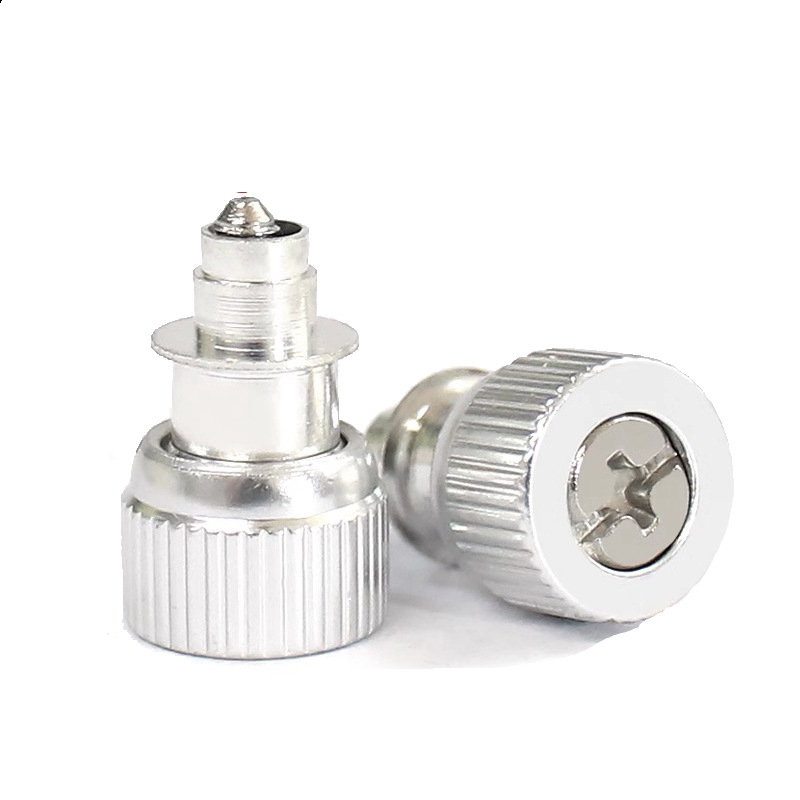
PF series spring‑loaded panel screws (PF16, PF26, PF51, PF52, also widely referred to as captive screws, quarter‑turn spring plunger panel fasteners) solve these pain‑points perfectly. As one‑piece integrated fasteners containing a built‑in compression spring, they remain permanently retained to the panel after installation. When unscrewed, the screw shaft does not fall away, drastically lowering the risk of lost hardware during equipment inspection and servicing.
Industry quality‑control statistics indicate roughly 35 % of captive‑panel‑screw field failures originate from improper sheet‑metal hole sizing, incorrect panel thickness selection, wrong spring‑compression preload, surface‑finish corrosion issues, or confusion between the four main PF‑series variants. This technical guide uses Aotuo PF16, PF26, PF51 and PF52 panel captive screws as its core research object. It breaks down full product specifications, laboratory performance‑test data, seven common field defects with root‑cause diagnosis, standardized installation workflows and real‑world industrial application cases, delivering practical technical guidance for mechanical design engineers, hardware procurement specialists, quality‑control inspectors, cabinet and server‑rack manufacturers.
1. Product Overview & Full Technical Specifications of PF‑Series Panel Captive Screws
PF‑series captive panel screws are integrated spring‑loaded fastener assemblies. Each complete unit consists of four core components: knurled captive head, Phillips drive recess, compression spring, and threaded shank, supplied together with a matching flat retaining washer. After installation, the retaining washer locks the fastener onto the outer face of the sheet‑metal panel. The spring allows the screw shaft to retract backward into the housing when loosened, keeping the screw permanently captive to the panel so it cannot separate and drop off.
There are four mainstream models within this product family, each with distinct functional differences:
- PF16: Standard spring‑loaded captive screw, non‑locking, retractable design
- PF26: Extended‑shank variant of PF16, for thicker panel assemblies
- PF51: Flush‑head captive panel screw, low‑profile flat finish
- PF52: Knurled large‑diameter grip‑head captive screw, optimised for finger‑operated tool‑free release
1.1 Core Technical Specification Table
| Specification Item | Technical Data |
|---|---|
| Product Models | PF16, PF26, PF51, PF52 Spring‑Loaded Captive Panel Screws |
| Standard Thread Sizes | Metric: M3, M4, M5, M6 |
| Available Material Options | Carbon‑steel with nickel‑plated finish; 304 stainless‑steel |
| Compatible Panel Thickness Range | 1.0 mm ~ 3.2 mm (standard range, extended lengths available) |
| Recommended Mounting Hole Diameter | M4 size: Ø 4.5 mm (hole tolerance +0.05 ~ +0.10 mm) |
| Drive Type | Phillips cross‑recess; PF52 knurled outer grip enables finger‑tightening |
| Spring Compression Travel | 2.5 mm‑4.0 mm retraction stroke |
| Spring Pre‑load Force (M4 sample) | Initial spring force: 18 N‑24 N; full compression force: 38 N‑45 N |
| Maximum Recommended Tightening Torque | M4: 1.2‑1.6 N·m; M5: 2.0‑2.5 N·m; M6: 3.0‑3.5 N·m |
| Nickel‑Plated Carbon‑Steel Salt‑Spray Resistance | ≥ 240 hours neutral salt spray |
| SUS 304 Stainless‑Steel Salt‑Spray Resistance | ≥ 500 hours neutral salt‑spray test, passivation treated |
| Operating Temperature Range | ‑30℃ ~ +120℃ |
| MOQ | 1000 pcs; small sample trial orders available |
| Production Lead‑Time | 7‑15 working days |
1.2 Model‑by‑Model Functional Comparison: PF16 / PF26 / PF51 / PF52
Choosing the wrong variant is one of the most‑frequent specification‑selection mistakes:
- PF16 (Standard Captive Screw) General‑purpose design, rounded knurled head, Phillips drive. Best suited for standard‑thickness cabinet panels (1.0‑2.0 mm). Balanced spring travel for most indoor server, telecom and control‑enclosure projects.
- PF26 (Long‑Shank Version) Identical head and spring assembly to PF16, longer threaded shank. Designed specifically for thicker panel stacks (2.0‑3.2 mm). If engineers install PF16 screws onto thick panels, insufficient thread engagement will lead to loose fastening.
- PF51 (Flush‑Head Low‑Profile Captive Screw) Flat, recess‑sitting head, no protruding knob. Used in applications requiring a smooth, snag‑free panel surface, where protruding fastener heads would create obstructions. Not suitable for finger‑twisting, requires screwdriver operation.
- PF52 (Large Knurled Grip‑Head Captive Screw) Wider, heavily knurled outer‑diameter head surface. High‑friction grip allows maintenance technicians to loosen and tighten the screw manually by hand, with no screwdriver required. Ideal for inspection panels accessed very frequently.
1.3 Material Performance Comparison: Nickel‑Plated Carbon‑Steel vs 304 Stainless‑Steel
Accelerated laboratory salt‑spray ageing tests and long‑term field exposure data quantify the real‑world performance gaps:
- Nickel‑Plated Carbon‑Steel PF‑Series Screws Tensile strength: 480‑560 MPa. Nickel plating delivers bright, uniform surface finish. Neutral salt‑spray resistance reaches 240 hours. If plating is scratched during repeated screwdriver tightening cycles, exposed carbon‑steel substrate may begin surface rust formation within 2‑3 months under high‑humidity indoor conditions. Cyclic vibration testing showed a 17 % risk of minor self‑loosening after 500 000 vibration cycles. Nickel‑plated carbon‑steel captive screws are most cost‑effective for dry, fully‑indoor cabinet installations with no moisture exposure.
- SUS 304 Stainless‑Steel PF‑Series Captive Screws Tensile strength ≥ 520 MPa, yield strength ≥ 205 MPa. Chromium‑rich passive film provides corrosion‑resistance protection even after minor surface scratches. Our 24‑month high‑humidity outdoor sheltered exposure test recorded zero rust defects. Identical cyclic vibration testing produced loosening‑failure rate of only 2.9 %. Stainless‑steel versions are strongly recommended for outdoor equipment, coastal‑site cabinets and high‑reliability industrial hardware projects.
2. Main Industrial Application Scenarios
PF‑series captive panel screws are widely deployed on equipment requiring regular panel removal for inspection, maintenance or filter replacement:
- Server Racks, Data‑Centre Cabinet Access Panels This represents the largest‑volume application. The captive screw eliminates dropped‑screw risk when IT engineers remove side panels during hardware upgrades. Real‑world case study: A server‑cabinet manufacturer initially used standard loose M4 bolts on equipment side‑panels. During maintenance, technicians lost small bolts at a rate of 13 % per 100 panel‑removal jobs, generating extra spare‑part costs and maintenance delays. After switching to PF16 captive panel screws, lost‑hardware incidents fell to 0.4 %. Even though unit fastener cost rose 23 %, overall equipment‑maintenance‑related expenses dropped 74 %.
- Telecommunications Equipment, Base‑Station Outdoor Enclosures Captive spring‑loaded fasteners secure inspection covers for telecom hardware exposed to outdoor temperature cycles.
- Industrial Control Panels, PLC Electrical Cabinets Used for removable front covers on automation‑system enclosures, granting electricians safe access to wiring terminals.
- Medical Instrument & Laboratory Equipment Housings Low‑particle‑shed captive fasteners are ideal for housings opened repeatedly for calibration and servicing.
- HVAC Air‑Handling Units, Air‑Filter Access Doors PF52 finger‑operated knurled‑head captive screws are commonly fitted to filter‑service panels, allowing fast filter‑change‑out operations with zero tools.
3. Seven Most‑Common PF‑Series Captive‑Screw Field Failures, Root‑Cause Analysis & Data‑Backed Solutions
After analysing eight years of customer quality feedback across more than 1200 captive‑fastener cabinet projects, we summarise the most‑frequently‑reported defects, measurable performance impacts, root causes and corrective solutions:
Defect 1: Screw cannot retract fully; spring fails to push shaft backward after loosening
Symptom: Once unscrewed from the receiving threaded hole, the captive screw shank remains protruding and will not retract back toward the panel surface. Measurable impact: Panel cover cannot be lifted away freely; protruding threads scratch cabinet paintwork during removal. Lab testing showed a failed spring reduces retraction travel from the standard 3.0 mm down to less than 0.5 mm. Root‑causes:
- Excessive installation tightening torque over‑compressed the spring past its elastic limit, causing permanent spring‑set deformation.
- Dirt, dust or paint debris has jammed inside the spring housing.
- Wrong model selection: PF16 short‑shank screw fitted onto over‑thick panels, restricting spring movement. Solutions:
- Strictly observe published maximum torque limits, never exceed recommended tightening torque values (e.g. 1.6 N·m for M4).
- Keep screw assemblies protected from paint over‑spray during cabinet powder‑coating. Install captive screws after panel painting is completed.
- Match screw shank length to measured panel thickness: select PF26 long‑shank variant for panels thicker than 2.0 mm.
Defect 2: Captive screw becomes loose and falls completely off the panel
Symptom: After repeated opening‑closing cycles, the captive screw detaches entirely from the cabinet panel, losing its “captive” retention function. Measurable impact: The fastener is no longer retained; the core advantage of the captive‑screw design is eliminated. Root‑causes:
- The retaining lock washer was not fitted correctly during assembly, or the washer was deformed during installation.
- Mounting hole diameter on sheet‑metal panel is excessively large, washer cannot grip securely.
- Repeated over‑torquing gradually widened the hole on thin sheet metal. Solutions:
- Always install the matching retaining flat washer as part of the captive‑screw assembly, do not omit this component.
- Maintain panel mounting‑hole diameter within the specified tolerance range (M4 hole: 4.50‑4.60 mm).
- For thin sheet metal below 1.2 mm thickness, add a reinforcing back‑up washer to distribute clamping load.
Defect 3: Cross‑recess Phillips drive gets stripped, screwdriver slips out during tightening
Symptom: The internal Phillips cross slot becomes rounded‑over; the screwdriver can no longer grip and turn the captive screw head. Measurable impact: The screw cannot be loosened, locking the access panel shut. Torque‑testing data shows stripped drive recesses fail at just 40‑50 % of the rated maximum torque specification. Root‑causes:
- Using an incorrectly‑sized screwdriver bit that does not fully match the Phillips recess dimensions.
- Applying far‑too‑high tightening torque.
- Low‑quality stamping forming shallow, thin‑wall cross‑recess. Solutions:
- Deploy screwdriver bits exactly matched to the screw’s Phillips size.
- Train assembly technicians to follow torque specifications, avoid brute‑force tightening.
- Perform random incoming‑batch drive‑torque sampling tests before mass installation.
Defect 4: Screw self‑loosens gradually under long‑term cyclic vibration
Symptom: After weeks or months in service on vibrating industrial machinery or transport equipment, the PF captive screw slowly unscrews on its own, and the panel cover becomes loose. Measurable impact: Clamping pre‑load drops sharply. Vibration‑cycle testing shows loose captive‑screw joints lose more than 80 % of initial fastening pre‑load after 500 000 vibration cycles. Root‑causes:
- No anti‑vibration locking strategy applied. PF‑series captive screws are standard spring‑loaded fasteners with no built‑in nylon locking feature.
- Insufficient initial tightening torque during assembly. Solutions:
- Tighten the screw to the mid‑point of the recommended torque range.
- Apply a tiny quantity of low‑strength removable thread‑locking adhesive (Loctite 222 grade) to screw threads. Do not use high‑strength permanent thread locker, otherwise future disassembly will become impossible.
Defect 5: Visible rust or corrosion stains appear on the screw head surface
Symptom: Brown rust specks form on the knurled head surface after several months of indoor or sheltered outdoor service. Root‑causes:
- Nickel‑plated carbon‑steel screws received plating scratches during screwdriver operation, exposing bare base metal.
- Cabinet operates within high‑humidity, coastal salt‑mist environment where nickel plating cannot provide long‑term protection.
- Supplier omitted final passivation treatment for stainless‑steel batches. Solutions:
- For humid or coastal‑site projects, upgrade fastener specification from nickel‑plated carbon‑steel to SUS 304 stainless‑steel PF‑series captive screws.
- Use screwdriver bits with rubber‑coated tips to reduce surface scratching risk during installation.
- Confirm with your supplier that stainless‑steel parts receive full post‑machining passivation treatment.
Defect 6: Thread‑engagement length insufficient, screw threads slip‑strip inside the receiving nut
Symptom: When tightening the captive screw, the threads spin freely without locking firmly into the mating threaded hole. Measurable impact: Panel cannot be securely fastened, there is zero reliable clamping load. Root‑causes:
- Incorrect short‑shank PF16 screw fitted to thick panels, leaving too few threads to engage with the receiver.
- Mating internal threads are damaged or mismatched thread pitch. Solutions:
- Calculate required thread engagement length before ordering: always select PF26 long‑shank variant when panel thickness exceeds 2.0 mm.
- Verify that both captive screw and receiving threaded component share identical metric thread pitch.
4. Standard Step‑by‑Step Installation Workflow for PF‑Series Captive Panel Screws
Follow this workflow to achieve long‑lasting, trouble‑free captive‑screw performance:
- Cabinet‑panel preparation: Punch mounting holes to specified diameter, deburr both sides of the hole. Important note: Install captive screws after all powder‑coating or paint finishing work is complete, to prevent paint contaminating the internal spring assembly.
- First‑article sample test: Fit one complete PF‑series screw unit onto a scrap‑panel sample matching your cabinet sheet‑metal thickness. Check spring retraction travel, verify no binding or jamming occurs, confirm torque settings before mass‑production assembly.
- Assembly sequence: Insert screw shaft through the outer side of the panel, then slide the matching retaining flat washer onto the protruding rear shank.
- Secure the washer: Apply light pressure to seat the retaining washer firmly against the inner‑side panel surface. The captive screw should slide smoothly back and forth with spring resistance and cannot pull free.
- Mount the access panel: Align cabinet cover panel, then tighten captive screw to recommended torque value. Do not over‑torque.
- Functional test: Loosen the screw, confirm the spring retracts the threaded shank backward, allowing the panel cover to lift away unobstructed.
- Batch sampling inspection: Every 200‑300 assembled screws, randomly remove one unit to test spring‑retraction travel and check captive retention strength.
5.Conclusion
PF16, PF26, PF51 and PF52 spring‑loaded captive panel screws are purpose‑engineered quick‑release fasteners that remove the risk of lost loose bolts on frequently‑opened equipment inspection panels. Their integrated spring‑loaded, permanently‑retained design cuts maintenance‑time delays, reduces spare‑part inventory costs and delivers repeatable, convenient opening cycles for server cabinets, telecom enclosures, industrial control panels and HVAC filter‑access doors.
Nearly all common field‑performance failures for PF‑series captive screws are traceable to specification‑selection errors: confusing PF16 and PF26 shank‑length variants, selecting PF51 flush‑head when finger‑operated PF52 is required, over‑torquing during installation, paint contamination of internal springs, or failure to select stainless‑steel material for humid operating environments.
By selecting genuine PF‑series captive panel screws manufactured to specification, matching model shank‑length to cabinet panel thickness, following the installation workflow and torque‑limits laid out in this guide, equipment manufacturers can build highly‑reliable, low‑maintenance panel‑fastening systems. For custom‑length captive‑screw requirements, material upgrade consultations or technical installation support, Aotuo’s engineering team can provide specification guidance, torque recommendations and full batch material‑test certification documentation.