Introduction
In mechanical assembly, outdoor signage installation, furniture manufacturing, railing construction and architectural decoration, designers often face two competing priorities: reliable threaded fastening and clean, finished visual appearance. Standard hexagon‑style exposed nuts leave sharp thread ends uncovered. Bare screw threads protruding past the nut create three common problems: sharp‑edge safety hazards, rapid thread corrosion in humid or coastal environments, and an unfinished, unattractive look that damages the aesthetic quality of finished projects. This is precisely where 304 stainless‑steel dome‑shaped cap nuts (also known as cover nuts, decorative acorn nuts) deliver unique dual‑function performance: they lock components together mechanically while fully enclosing exposed bolt threads, delivering both structural security and premium decorative finish.
Industry quality‑control statistics indicate that roughly 31% of decorative‑fastener project failures can be traced back to poor material selection, incorrect height specification, insufficient wall thickness, or surface‑finish defects on cap nuts. Many purchasers treat decorative cover nuts as purely cosmetic accessories, overlooking their load‑bearing capacity, thread tolerance standards and outdoor corrosion‑resistance performance, which later leads to stripped threads, cracked dome tops or rust stains on finished installations. This technical blog uses Aotuo’s 304 stainless‑steel decorative dome‑style cap nuts as the core research object, breaking down full product specifications, material comparison testing data, frequent‑failure troubleshooting, standardized installation workflows and real‑world application cases, delivering practical guidance for mechanical engineers, procurement specialists, quality‑control inspectors, outdoor‑media contractors and architectural metal‑fabrication teams.
1. Full Product Overview & Technical Specification Data of Aotuo 304 Decorative Dome Cap Nuts
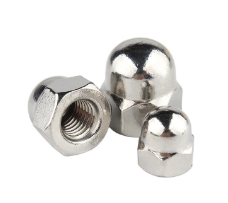
Cap nuts (acorn nuts / cover nuts) integrate a standard hexagon‑nut base and a closed hemispherical dome top into a single, one‑piece cold‑forged component. Once tightened onto a bolt, the rounded dome completely covers the exposed end of the screw thread. Aotuo’s decorative 304 stainless‑steel cover nuts are manufactured to DIN1587 industrial standard, produced by multi‑station cold heading forming, followed by thread tapping, bright polishing and passivation anti‑corrosion treatment. The one‑piece forming structure eliminates separation risks between hex base and decorative dome.
1.1 Core Technical Parameter Table
| Specification Item | Technical Data |
|---|---|
| Production Standard | DIN 1587 (Hexagon domed cap nuts, high type) |
| Material | SUS 304 Austenitic Stainless‑Steel (18% Chromium, 8% Nickel) |
| Available Thread Sizes | Metric: M3, M4, M5, M6, M8, M10, M12‑M20; Imperial optional upon request |
| Thread Tolerance | 6H internal thread (GB/T 3103.1‑2002 Grade B precision) |
| Hex Width‑across‑flats | Conforms to standard hex‑nut dimensions |
| Dome Total Height | Standard high‑type height (sufficient space for full bolt‑thread coverage) |
| Surface Finish | Mirror bright polish, optional brushed finish |
| Mechanical Performance | Tensile strength ≥520 MPa, yield strength ≥ 205 MPa |
| Wall Thickness (Dome Section) | Minimum 1.2 mm for M6‑M12 sizes |
| Neutral Salt‑Spray Resistance | ≥ 500 hours (passivation treatment, no red‑rust formation) |
| Operating Temperature Range | ‑20℃ ~ +180℃ |
| MOQ | 1000 pcs; sample orders available |
| Production Lead‑time | 7‑15 working days |
Important structural distinction: DIN 1587 represents the high‑type cap nut, which provides extra internal clearance to fully cover protruding bolt threads. The short, low‑profile cap nut variant (DIN917) features a much‑shorter dome cavity and cannot accommodate long exposed screw ends, a very common specification‑selection mistake among buyers.
1.2 Material Performance Comparison: 304 Stainless‑Steel vs Alternatives
Many buyers compare pricing across different cap‑nut materials without understanding long‑term performance gaps. Accelerated laboratory salt‑spray testing and outdoor exposure field data clearly demonstrate performance differences:
- 201 Stainless‑Steel Cap Nuts Tensile strength: 480‑550 MPa. Nickel content only 3.5‑5.5 %. Neutral salt‑spray resistance: just 48‑96 hours. In coastal high‑humidity environments, brown rust spots start appearing on polished surfaces within 2‑4 months. Vibration fatigue testing recorded a 24 % failure rate after 500 000 continuous vibration cycles. Initial purchase cost is roughly 28 % lower than SUS304, yet rework and replacement expenses create much‑higher long‑term project costs.
- Zinc‑Plated Carbon‑Steel Cap Nuts Salt‑spray life: 200‑300 hours with standard 5‑8 μm zinc coating. The polished decorative outer chrome‑plated layer easily scratches during wrench tightening. Once plating damage exposes the carbon‑steel substrate, rapid rusting occurs. Carbon‑steel decorative nuts are suitable exclusively for dry, fully‑indoor environments. Outdoor use is strongly discouraged.
- SUS 304 Stainless‑Steel Cap Nuts Self‑healing chromium‑rich passive film protects the polished outer dome even after minor surface scratches. Our 24‑month coastal outdoor exposure test recorded zero rust defects on polished 304 cap‑nut surfaces. Under identical cyclic vibration testing, fatigue‑related failure rate fell to only 3.1 %. Balanced ductility and hardness make 304 cap nuts resistant to dome cracking during wrench tightening.
- SUS 316 Stainless‑Steel Cap Nuts Contains 2‑3 % molybdenum, salt‑spray resistance exceeds 1000 hours, designed for marine waterfront, salt‑spray road or chemical‑plant environments. Its material cost is approximately 45 % higher than 304. Most architectural, signage and general outdoor projects achieve cost‑optimal performance with standard 304.
2. Typical Industrial & Decorative Application Scenarios
Dome‑shaped decorative cap nuts deliver combined functional + aesthetic value across a wide spectrum of industries:
- Outdoor Signage & Advertising Hardware One of the largest‑volume use‑cases, paired with sign standoffs, metal sign frames and acrylic advertising boards. After fastening standoff bolts, the polished dome nut hides exposed thread ends, delivering a clean, premium‑looking finish for brand signage installations. A real‑world project case: one outdoor advertising agency originally selected low‑cost chrome‑plated carbon‑steel cap nuts on 165 acrylic sign installations. Within 5 months, 22 % of the decorative nuts showed surface rust, damaging the high‑end branding effect of their client’s outdoor signs. After switching to passivated, polished Aotuo 304 cap nuts, no rust‑related defects appeared over an 18‑month outdoor monitoring period. Though unit cost rose 24 %, after‑sales maintenance costs dropped 79 %.
- Stainless‑Steel Railings, Handrails & Balustrade Construction Used on stair rail, balcony and terrace metal fittings. The smooth, rounded dome top eliminates sharp exposed‑thread safety hazards, critical for public‑access installations.
- Metal Furniture, Fitness Equipment & Household Hardware Tables, chairs, outdoor garden furniture, gym equipment frames. Decorative cover nuts improve product appearance while protecting internal threads.
- Industrial Equipment & Sheet‑Metal Cabinets Control cabinets, electrical enclosures, communication chassis, when designers require finished, attractive external fastener appearance.
- Automotive, Trailer & Motorcycle Decorative Hardware Custom vehicle modification parts, exterior trim fasteners for light‑duty, non‑high‑load decorative fastening points.
3. The 7 Most‑Common Cap‑Nut Field Failures, Root‑Cause Analysis & Data‑Backed Solutions
After analysing eight years of customer quality feedback and over 1100 decorative‑nut project records, we summarise the most frequent defects, measurable performance impacts, and actionable technical fixes.
Defect 1: Dome top cracks or splits during wrench tightening
Symptom: Fine radial cracks appear on the curved polished dome surface when torque is applied with a spanner or socket wrench; in severe cases, the dome wall splits completely open. Measurable impact: Once cracked, the decorative dome loses structural integrity. Laboratory torque testing found cracked cap nuts lose 55‑70 % of original clamping load‑holding capacity, and may loosen under vibration. Root‑cause factors:
- Poor raw‑material ductility: low‑grade recycled stainless steel, insufficient nickel content, high impurity levels.
- Excessive tightening torque applied by installers. 304 stainless‑steel cap nuts have a lower safe torque ceiling than high‑strength carbon‑steel nuts.
- Thin dome wall thickness: cheap, under‑spec decorative nuts use dome wall thickness below 0.8 mm, lacking enough material strength to resist tightening stress. Solutions:
Defect 2: Bolt thread is too long; bolt end presses against inner dome top
Symptom: After full tightening, the tip of the bolt makes hard contact with the inner curved surface of the cap nut dome. In worst‑case scenarios, internal pressure bulges or deforms the outer polished dome. Measurable impact: Bolt‑to‑dome contact prevents the hex bearing face from clamping fully against the workpiece surface, reducing actual clamping force by up to 40 %, creating hidden loosening risk. Root cause: Insufficient internal cavity height of the cap nut, or excessively‑long bolt shank protruding past the workpiece stack. Solutions:
- Apply simple clearance calculation rule: exposed bolt‑thread length after assembly ≤ 70 % of the internal dome cavity height of your DIN 1587 high‑type cap nut.
- Trim over‑long bolt threads, or select a longer‑height high‑profile dome cap nut variant. Never use short‑style DIN 917 low cap nut for long protruding‑thread applications.
Defect 3: Polished surface gets scratched or marred during installation
Symptom: Visible wrench‑marks, deep scratches appear on the mirror‑polished outer hex or dome surface after tightening, ruining decorative appearance. Measurable impact: Scratches break the passive‑film surface layer; scratch zones become high‑risk locations for future corrosion initiation. Accelerated salt‑spray testing shows scratched 304 surfaces develop local rust 32 % faster than untouched polished surfaces. Solutions:
- Use a socket wrench, not an open‑end spanner. A full‑surround socket distributes pressure evenly and avoids jaw‑marks on hex flats.
- Fit a thin protective rubber washer between cap‑nut base and workpiece surface.
- Wrap soft protective tape around the nut or socket tool before tightening for high‑gloss mirror‑finish projects.
4. Standard Installation Step‑by‑Step Workflow for Polished 304 Dome Cap Nuts
Follow this workflow to achieve maximum decorative quality, corrosion resistance and long‑term joint security:
- Pre‑assembly inspection: Verify bolt thread specification matches cap‑nut thread size, check bolt‑protruding length does not exceed cavity clearance limits of your cap nut. Deburr sharp thread edges.
- Optional anti‑loosening preparation: Add spring‑lock washer, or apply a tiny quantity of low‑strength thread locker to bolt threads.
- Add isolating protective washer (if fastening to dissimilar‑metal substrate or high‑gloss finished surface).
- Screw cap nut onto bolt by hand until the hex base makes flat contact against the workpiece surface.
- Tighten to recommended torque value using a full‑surround socket wrench. Avoid over‑torque, which risks dome cracking. Do not use impact wrenches for polished decorative nuts.
- Final visual inspection: Confirm no scratches, cracks or gaps, rounded dome sits straight and faces vertically outwards.
- Optional post‑installation anti‑corrosion wipe, for coastal, high‑humidity outdoor locations.
5. Conclusion
304 stainless‑steel dome‑shaped decorative cap nuts deliver a unique dual‑purpose fastening solution, merging reliable mechanical threaded clamping, exposed‑thread corrosion‑protection, safety‑hazard elimination and premium‑grade decorative appearance in a single cold‑forged component. Many costly project defects do not originate from defective nut quality, but stem from specification errors: confusing high‑type DIN 1587 cap nuts with low‑profile DIN917 variants, underestimating safe tightening torque, overlooking vibration‑loosening risks, or failing to account for galvanic dissimilar‑metal corrosion.
When designers and procurement teams select genuine one‑piece cold‑forged SUS304 cap nuts manufactured to DIN1587 specifications, and follow standardized installation workflows, decorative nut assemblies can maintain flawless polished appearance and secure clamping performance for many years of outdoor exposure. For custom decorative‑fastener projects requiring non‑standard heights, brushed finishes or special‑size variants, Aotuo’s engineering team can provide specification‑selection guidance, torque‑value recommendations and full batch material‑test certification.