The Engineering Challenge: Cyclic Stress and Fatigue
Automotive engine assemblies – including cylinder heads, main bearing caps, and connecting rods – rely on threaded studs to maintain clamp load despite constant thermal expansion and contraction. Similarly, aircraft landing gear struts and control rod attachments face fluctuating aerodynamic and impact loads. Traditional fasteners often suffer from micro‑crack initiation at thread roots, leading to eventual fatigue failure. Inconsistent thread quality or insufficient engagement length can dramatically shorten service life and compromise safety.
AOTUO’s Solution: Precision Threads and High‑Strength Materials
AOTUO addresses these challenges on three fronts:
-
Cold Extrusion Thread Technology – Unlike cut threads, AOTUO’s cold‑formed threads have a continuous grain flow, eliminating stress concentration points. The result is a smoother thread profile, hardened surface (approximately 20% harder than machined threads), and significantly improved fatigue life.
-
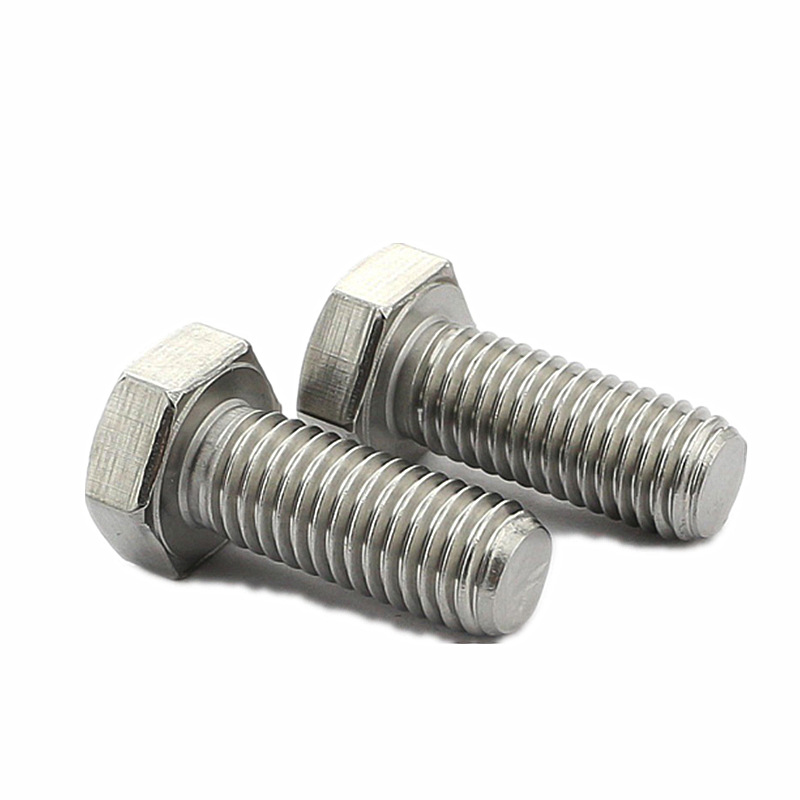
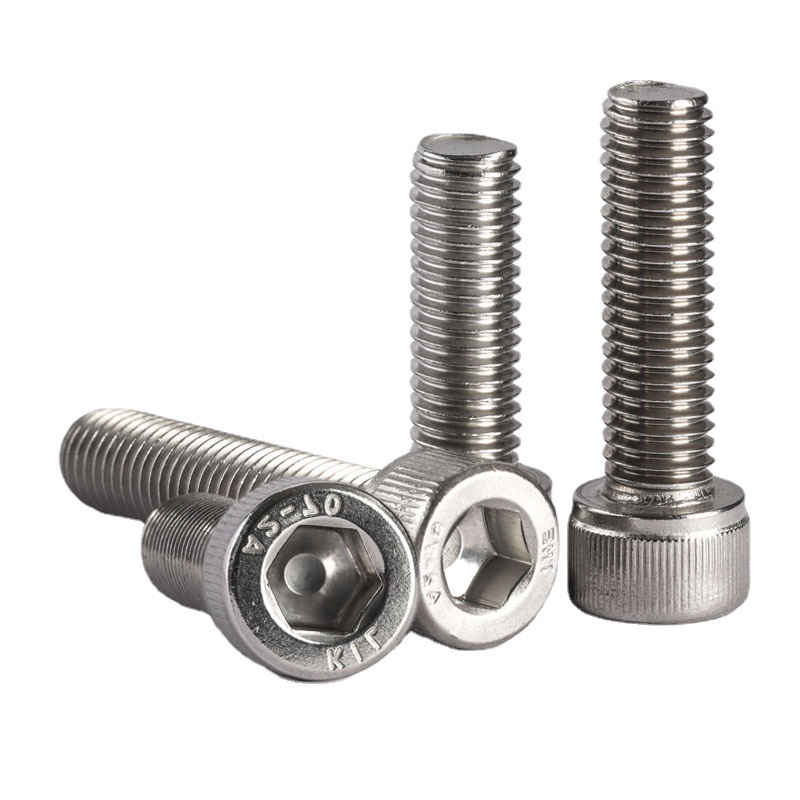
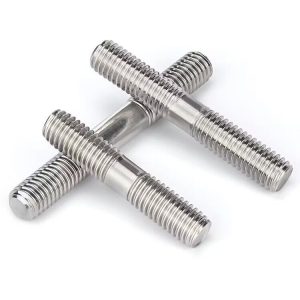
Multiple Strength Grades – For automotive and aerospace applications, AOTUO offers double end threaded studs in:
-
8.8 / 10.9 / 12.9 grade (carbon/alloy steel) – providing minimum tensile strengths of 800 MPa, 1000 MPa, and 1200 MPa respectively. Grade 12.9 is ideal for landing gear bolts and high‑load engine mounts.
-
A2‑70 / A4‑80 stainless steel (304 / 316) – for corrosion‑resistant needs in hydraulic systems or exposed components.
-
-
Uniform Load Distribution – AOTUO precision‑grinds thread profiles to ensure even load distribution across all engaged threads, preventing localized overstressing that leads to premature fatigue.
Real‑World Applications
-
Automotive Engine Assembly: AOTUO’s 10.9‑grade double end studs are used to secure cylinder heads and main bearing caps in high‑performance diesel engines. The vibration‑resistant performance maintains torque retention even after 500+ thermal cycles.
-
Aircraft Landing Gear: For a regional jet manufacturer, AOTUO supplies custom‑length 12.9‑grade studs with corrosion‑resistant surface treatment (zinc plating + passivation) to withstand hydraulic fluid exposure and high‑impact landings.