1. Introduction: A Puzzling Phenomenon
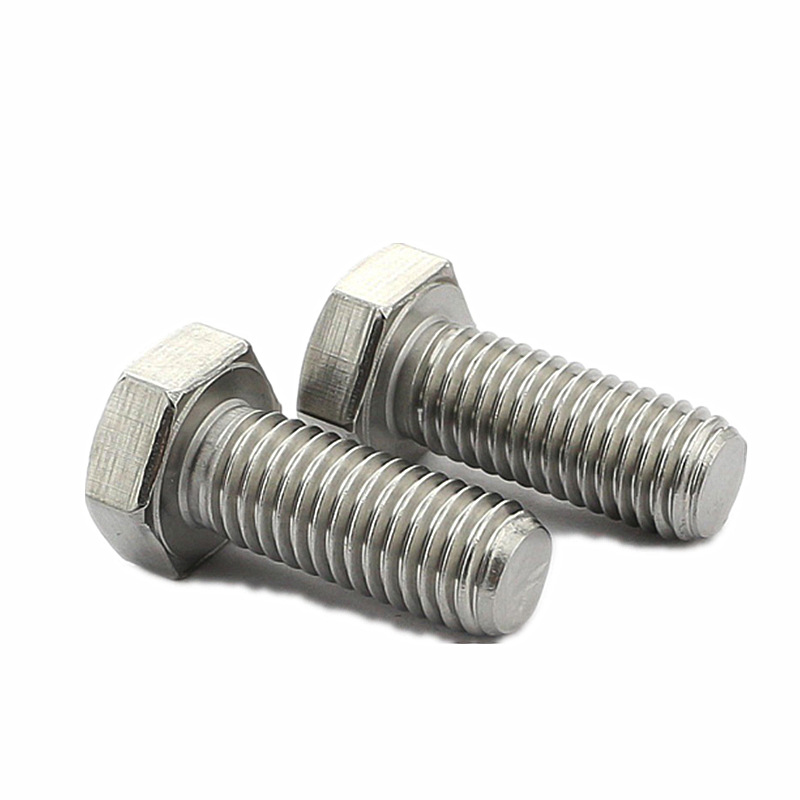
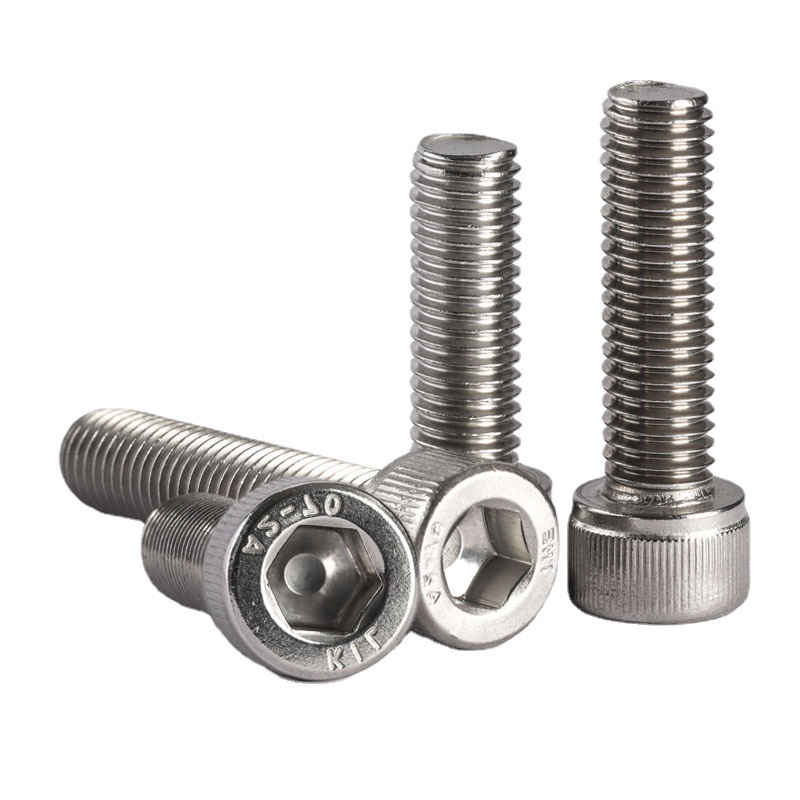
One of the most frequently encountered—and most misunderstood—phenomena in the fastener industry is the magnetism exhibited by stainless steel fasteners. Procurement professionals, quality inspectors, and end-users alike have long been puzzled by the same question: “Why does my 304 stainless steel screw attract a magnet? Does this mean it‘s counterfeit or substandard?”
The short answer is no—but understanding why requires a deep dive into metallurgy, cold working processes, and the microstructural transformations that occur during fastener manufacturing. This article provides a comprehensive technical analysis of stainless steel fastener magnetism, addressing the root causes, debunking common misconceptions, and offering actionable guidance for international buyers and quality professionals.
2. The Metallurgical Foundation: Understanding Stainless Steel Types
To understand why some stainless steel fasteners are magnetic and others are not, we must first understand the fundamental difference between the major stainless steel families.
2.1 Austenitic Stainless Steels (300 Series)
304 and 316 stainless steels belong to the austenitic family. In their annealed (solution-annealed) condition, these alloys possess a face-centered cubic (FCC) crystal structure that is theoretically non-magnetic or only weakly magnetic. This is because the austenitic phase does not exhibit ferromagnetism.
The typical composition of 304 stainless steel includes approximately 18% chromium and 8% nickel, while 316 contains 16–18% chromium, 10–14% nickel, and 2–3% molybdenum. The nickel content is the key element that stabilizes the austenitic structure at room temperature.
2.2 Martensitic and Ferritic Stainless Steels (400 Series)
410, 420, and 430 stainless steels belong to the martensitic and ferritic families. These alloys have a body-centered cubic (BCC) crystal structure that is inherently ferromagnetic-1. Fasteners made from these grades are strongly magnetic by nature.
These “stainless iron” grades offer higher hardness and wear resistance but generally provide lower corrosion resistance compared to 304/316. They are typically specified for applications requiring high hardness rather than maximum corrosion protection.
2.3 Key Distinction at a Glance
| Grade | Family | Crystal Structure | Magnetic Property |
|---|---|---|---|
| 304 / 316 | Austenitic (300 series) | FCC (annealed) | Non-magnetic / weakly magnetic |
| 304 / 316 (cold-worked) | Austenitic (300 series) | FCC + BCC (martensite) | Weak to moderate magnetic |
| 410 / 420 / 430 | Martensitic / Ferritic (400 series) | BCC | Strongly magnetic |
3. The Root Cause: Cold Working and Martensitic Transformation
3.1 The Mechanism
So why do qualified 304/316 stainless steel fasteners sometimes show weak magnetism? The answer lies in microstructure transformation induced by cold working.
During the manufacturing of fasteners—which involves processes such as heading (cold forging), thread rolling, stamping, and cold heading—the metal undergoes significant plastic deformation. This deformation causes the atomic lattice structure to strain, and in areas of high deformation, part of the austenitic structure transforms into martensite–.
Martensite is a magnetic phase. The more cold working a fastener undergoes, the greater the volume fraction of martensite that forms, and consequently, the more magnetic the fastener becomes
3.2 Deformation Gradients: Why Magnetism Varies Within a Single Fastener
A fascinating aspect of this phenomenon is that magnetism is not uniform across a single fastener. The degree of cold deformation varies across different regions of the screw:
Thread region > Head region > Shank region — magnetism decreases in this order
This gradient occurs because:
Threads undergo the most severe cold deformation during thread rolling, creating the highest martensite content and strongest magnetic response
Heads experience significant deformation during the heading process, producing moderate magnetism
Shanks undergo the least deformation, resulting in the weakest magnetic response
3.3 Why 316 Stainless Steel is Less Magnetic Than 304
Not all austenitic stainless steels respond equally to cold working. 316 stainless steel, with its higher nickel content (10–14% vs. 8–10.5% in 304), exhibits virtually no magnetism after cold working in most cases. The higher nickel content provides greater austenite stability, making the alloy more resistant to strain-induced martensitic transformation.
This is why buyers who require low-magnetism or non-magnetic fasteners often specify 316 over 304—though it comes at a higher cost.
3.4 Other Sources of Magnetism
Beyond cold working during manufacturing, magnetism can also be induced by:
-
Welding — localized heating and cooling can create martensitic zones
-
Bending — similar to cold working, deformation induces martensite formation
-
Low-temperature exposure — some austenitic steels can transform at cryogenic temperatures
4. Industry Data and Standards
4.1 Tensile Strength and Cold Working
The cold working that induces magnetism also increases tensile strength. According to EN ISO 3506-1, cold-worked austenitic stainless steel fasteners achieve a minimum tensile strength of 700 MPa (property class A2-70 for 304 and A4-70 for 316).
This is a critical point: the very process that creates magnetism is also the process that gives the fastener its required strength. Without cold working (and without magnetism), a 304 fastener would have significantly lower mechanical properties.
4.2 Industry Recognition
Leading fastener technical resources confirm this understanding:
“Type 304 is an example of a stainless steel that is quite susceptible to forming martensite after cold working… Due to martensite being magnetic, the once nonmagnetic austenitic stainless steel will now have a degree of magnetism.” “The more cold forming, the more its microstructure is changed to martensite, and subsequently the more magnetic the fastener is likely to be.”
5. When Magnetism IS a Concern
While magnetism in 304/316 fasteners is generally normal and acceptable, there are specific applications where magnetism may be problematic:
5.1 Electronics and Sensitive Equipment
In applications involving sensitive electronic equipment, MRI machines, or precision instruments, even weak magnetic fields can interfere with operation. For these applications, buyers should:
-
Specify 316 stainless steel (less prone to magnetism)
-
Request special low-magnetic grades (e.g., nitrogen-strengthened austenitic alloys)
-
Specify solution-annealed condition (though this reduces strength)
5.2 Magnetic Particle Inspection (MPI)
For fasteners that will undergo magnetic particle inspection for crack detection, the natural magnetism of cold-worked fasteners can complicate the inspection process. In such cases, demagnetization may be required before inspection.
5.3 Low-Magnetic Fastener Options
If low magnetism is an absolute requirement, the following options are available—though at significantly higher cost
| Option | Description | Cost Impact |
|---|---|---|
| 316 stainless steel | Higher nickel content reduces martensite formation | Moderate increase |
| Special low-magnetic austenitic grades | Alloys specifically designed for non-magnetic applications | Significant increase |
| Solution annealing after cold working | Restores austenitic structure but reduces strength | Moderate increase, strength trade-off |
| Nitrogen-strengthened austenitic alloys | High strength with low magnetism | Significant increase |
6. Practical Recommendations for International Buyers
6.1 Specification Guidance
When specifying stainless steel fasteners for international procurement, include the following in your purchase orders:
-
Material grade — Clearly specify “304 stainless steel” or “316 stainless steel” per ASTM A276, JIS G4303, or EN 10088
-
Property class — Specify A2-70 (304) or A4-70 (316) to ensure proper strength
-
Magnetic requirement — If relevant, specify “standard magnetism from cold working is acceptable” or “low-magnetism required” with specific acceptance criteria
6.2 Quality Verification
When inspecting incoming stainless steel fasteners:
-
Do NOT use a magnet as a quality test — it will not tell you whether the material is genuine 304/316
-
Request mill test certificates (MTCs) — these provide chemical composition and mechanical property verification
-
Use proper material verification methods — such as X-ray fluorescence (XRF) spectroscopy for grade confirmation
6.3 Supplier Qualification Questions
When qualifying a new stainless steel fastener supplier, consider asking:
-
“What cold working processes do you use in manufacturing?”
-
“Do you perform solution annealing after cold working? If so, what are the mechanical property implications?”
-
“Can you provide test reports confirming material grade and mechanical properties?”
-
“For low-magnetism applications, what grades and processes do you recommend?”
7. Summary: The Professional Perspective
Stainless steel fastener magnetism is a well-understood, normal phenomenon that arises from the cold working processes essential to fastener manufacturing
professionals:
| Key Point | Explanation |
|---|---|
| 304/316 fasteners are normally magnetic | Cold working induces martensitic transformation |
| Magnetism does NOT indicate poor quality | It is a physical phenomenon, not a material defect |
| Magnetism does NOT affect corrosion resistance | The passive oxide layer remains intact |
| Non-magnetic 304 fasteners are likely annealed | Annealing reduces strength—unsuitable for most applications |
| 316 is less magnetic than 304 | Higher nickel content stabilizes austenite |
| Magnetism varies within a single fastener | Threads > Head > Shank (deformation gradient) |
The fastener industry’s collective understanding has evolved significantly on this topic. Leading technical resources and international standards now clearly recognize that magnetism in cold-worked austenitic stainless steel fasteners is a normal consequence of manufacturing—not a defect, not a sign of counterfeit material, and not a compromise of performance.
For international buyers, the message is clear: do not reject stainless steel fasteners based on magnetism alone. Instead, rely on proper material certification, chemical analysis, and mechanical testing to verify quality. A magnet is a poor substitute for a mill test certificate.