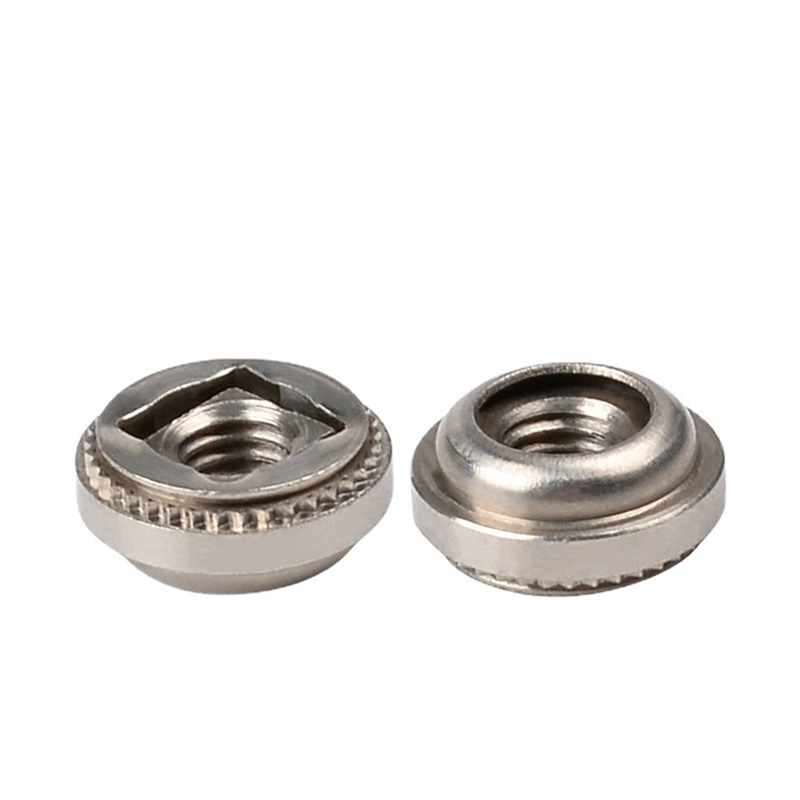
Square Nut is a quadrilateral nut, which is square in shape compared to hexagonal nut. Square nut is usually used in special installation environment or with specific bolts.
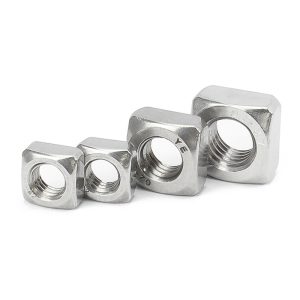
Characteristics of square nuts
1. Shape:
– Square: It has four parallel sides and four right angles, which makes it better adaptable to square bolts or accessories when installed.
2. Material:
– Common materials: including carbon steel, stainless steel, brass, etc. Different materials are suitable for different environments and application requirements.
3. Specifications:
– Size: The size of the square nut includes the side length and thread specifications. Common specifications are M6, M8, M10, etc.
4. Surface treatment:
– Galvanizing: Improve corrosion resistance.
– Black oxidation: Increase corrosion resistance and aesthetics.
– Electroplating: Used to improve appearance and rust resistance.
Classification of square nuts
1. Standard Square Nut:
– Features: Ordinary square design, suitable for ordinary connection and fixing needs.
2. Locking Square Nut:
– Features: With locking functions, such as built-in nylon ring, to prevent loosening under vibration or other dynamic conditions.
– Application: Suitable for occasions where anti-loosening is required.
3. Thin Square Nut:
– Features: Thinner than standard square nuts, suitable for places with limited space.
– Application: For compact equipment and structures.
4. Heavy Square Nut:
– Features: Thicker than standard square nuts, providing larger contact surface and higher strength.
– Application: For high-strength connection occasions.
Application of square nuts
1. Mechanical equipment:
– Application: used to fix mechanical parts, such as brackets, connectors, etc.
2. Construction engineering:
– Application: used to connect and fix building structures, such as steel structures, frames, etc.
3. Furniture:
– Application: used for assembling and connecting furniture, such as fixing tables and chairs.
4. Automobile:
– Application: used for connecting automobile parts, such as wheels, engine parts, etc.
5. Electrical equipment:
– Application: used for the installation of electrical equipment and accessories, such as distribution boxes, switchgear, etc.
Installation and Usage
1. Choose the right specifications:
– Thread matching: Make sure the selected square nut matches the thread of the bolt or screw.
2. Use the right tools:
– Wrench: Use a square wrench of the appropriate size for tightening or removal.
– Strength: Appropriate torque can ensure the tightening force of the nut, but avoid over-tightening to cause damage.
3. Check the tightening:
– Regular inspection: Regularly check the tightening status of the square nut to ensure the firmness of the connection.
4. Anti-loosening measures:
– Use locking nuts: In applications where loosening needs to be prevented, use locking square nuts or add locking glue.
Square nuts provide better fixing effect in some applications with their unique design. Understanding their characteristics and correct use can help ensure the reliability and safety of the connection.