1. Introduction: The Specialized World of Banjo Bolt Fastening
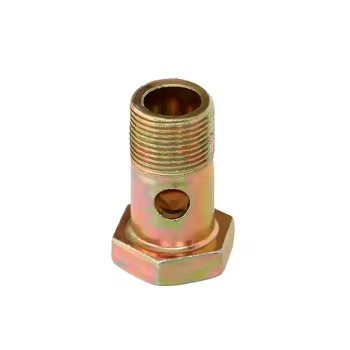
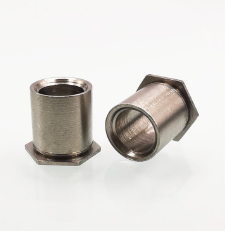
In hydraulic, fuel, and brake systems, the hex head bolt with a central hole — universally known as a banjo bolt — serves a dual function that few other fasteners can match: it clamps a fluid fitting against a sealing surface while simultaneously providing a through-passage for fluid flow. This dual role makes the banjo bolt one of the most critical and most misunderstood fasteners in fluid-handling assemblies.
Unlike a standard hex bolt, the banjo bolt is subjected to a complex combination of loads: torsional stress during tightening, axial clamping force to compress the sealing washers, internal fluid pressure acting on the central cavity, and bending loads transmitted from the attached hose or pipe. Among these, breaking torque — the maximum torsional load the bolt can withstand before failure — is the parameter that most directly governs assembly safety.
This article provides a professional analysis of breaking torque for banjo bolts, examining the applicable standards, the effect of the central hole on torsional capacity, the relationship between tightening torque and sealing performance, common failure modes, and practical solutions for engineers and procurement professionals.
2. Standard Framework: ISO 898-7 and GB/T 3098.13
2.1 Scope of the Torsional Test Standard
The international standard governing breaking torque for small-diameter fasteners is ISO 898-7:1992, adopted identically in China as GB/T 3098.13-1996. This standard specifies a torsional test for determining the breaking torque of bolts and screws with nominal diameters from 1 mm to 10 mm and property classes 8.8 to 12.9.
Critically, the standard applies to two categories of fasteners where conventional tensile testing is not feasible:
-
Fasteners with thread sizes below M3, for which minimum tensile loads are not specified in ISO 898-1
-
Fasteners with diameters of 3–10 mm that are too short to undergo standard tensile testing
The standard explicitly states that the minimum breaking torques are not valid for hexagon socket set screws. Banjo bolts are typically hex head fasteners, so they fall within the applicable scope of ISO 898-7.
2.2 Test Method and Instrumentation
The torsional test per ISO 898-7 / GB/T 3098.13 requires the following conditions:
-
The bolt is clamped in a test fixture with at least two full threads engaged
-
A clearance of at least one thread diameter is maintained between the fixture and the bolt head
-
Torque is applied continuously and smoothly until failure
-
The torque meter must have a maximum error of ±7% of the specimen’s minimum breaking torque
The test measures the maximum torque recorded before fracture or thread stripping occurs. The bolt must not fracture before reaching the specified minimum breaking torque.
3. Effect of the Central Hole on Torsional Capacity
3.1 Stress Concentration at the Hole
Beyond the sectional loss, the edges of the central hole act as stress concentration sites during torsional loading. Sharp-edged or burred holes — which can result from drilling without proper deburring — create local stress raisers that can initiate cracks under cyclic or static torsional loads.
Industry guidance emphasizes that burrs or sharp edges at drilled holes can bite into adjacent surfaces and increase stress concentration, potentially reducing the effective torsional strength below the nominal value calculated from the net section.
3.2 Practical Implication for Banjo Bolt Selection
Because of the combined effects of sectional loss and stress concentration, a banjo bolt cannot be assumed to have the same breaking torque as a solid hex bolt of the same nominal diameter and property class. Engineers specifying banjo bolts should:
-
Obtain breaking torque data from the manufacturer for the specific banjo bolt design
-
Apply an appropriate safety factor to account for the central hole, stress concentration, and fluid-pressure loads
-
Never exceed 60–70% of the solid-bolt breaking torque as a conservative assembly limit when specific banjo-bolt data is unavailable
4. Breaking Torque Data: Solid Bolts as a Baseline
The following table presents minimum breaking torque values for solid carbon steel hex bolts per GB/T 3098.13, which serve as the baseline from which banjo bolt capacity must be adjusted downward.
| Thread Size | Pitch (mm) | 8.8 (N·m) | 10.9 (N·m) | 12.9 (N·m) |
|---|---|---|---|---|
| M6 | 1.00 | 13 | 16 | 17 |
| M8 | 1.25 | 33 | 40 | 44 |
| M10 | 1.50 | 66 | 81 | 90 |
| M10×1 (fine) | 1.00 | 84 | 102 | 114 |
| M12 | 1.75 | — | — | — |
For M12 solid bolts, data from ISO 898-7 indicates minimum breaking torques in the range of approximately 115–130 N·m for property class 8.8, depending on pitch and thread tolerance.
4.1 Comparing Banjo Bolt Application Torque to Solid-Bolt Breaking Torque
The actual tightening torque specified for banjo bolts in hydraulic and brake systems is typically far below the solid-bolt breaking torque. This reflects both the reduced torsional capacity of the holed bolt and the sealing function that governs the assembly — the crush washer must be compressed enough to seal, but not so much that it is destroyed.
Published banjo bolt torque specifications from automotive and hydraulic sources include:
| Application | Thread Size | Specified Tightening Torque | Source |
|---|---|---|---|
| Brake hose banjo bolt (automotive) | M10 typically | 25 N·m (18 ft-lb) | NHTSA service data |
| Hydraulic assembly banjo bolt | — | 24 N·m (17 ft-lb) | Hydraulic service specifications |
| Wilwood brake banjo bolt | — | 96–120 in-lb (≈10.8–13.6 N·m); max 144 in-lb | Wilwood engineering specification |
| Banjo bolt with copper crush washers | M10×1.0 | 15 N·m (11.1 ft-lb) | Industry practice |
| A/T cooler line banjo bolt | — | 28–31 N·m (21–22 lb-ft) | Transmission service data |
The M10 brake banjo bolt at 25 N·m is operating at approximately 38% of the M10 8.8 solid-bolt breaking torque (66 N·m) . This substantial safety margin reflects the need to preserve the sealing function and account for the central hole.
4.2 The “Too Tight to Seal” Paradox
A counterintuitive but critical phenomenon in banjo bolt assembly is that over-tightening can actually cause leaks rather than prevent them. The sealing function depends on the controlled compression of the crush washers (typically copper or aluminum). When torque exceeds specification:
-
The crush washer is over-compressed and permanently deformed, losing its elastic recovery and sealing capability
-
The threads in the mating port (often aluminum or cast iron) can strip, destroying the female thread and requiring costly repair
-
The banjo bolt itself can stretch or fracture, leading to sudden loss of fluid pressure and potential safety failure
Industry forums are replete with accounts of banjo bolts leaking after over-tightening, with users discovering stripped threads in calipers or permanently deformed sealing washers. The correct approach is to torque to specification with new crush washers, and if leakage persists, investigate the sealing surfaces rather than simply increasing torque.
5. Common Failure Modes and Root Causes
5.1 Thread Stripping in the Mating Port
Symptom: The banjo bolt rotates without building torque; fluid leaks from the fitting.
Root Causes:
-
Applied torque exceeded the thread shear strength of the mating material (often aluminum or soft cast iron, which have lower stripping resistance than the steel bolt)
-
Cross-threading during installation
-
Reuse of deformed or work-hardened threads
Solution: Use a calibrated torque wrench, install the bolt by hand for the first several threads, and always use new crush washers to minimize the torque required for sealing.
5.2 Bolt Fracture at the Thread Root or Hole
Symptom: The banjo bolt breaks during tightening or in service.
Root Causes:
-
Applied torque exceeded the breaking torque of the holed bolt
-
Stress concentration at the edge of the central hole or at the thread runout
-
Material defect or improper heat treatment
Solution: Verify the manufacturer’s breaking torque specification for the specific banjo bolt; apply a safety factor that accounts for the central hole; and avoid impact tools that can deliver torque spikes.
5.3 Crush Washer Failure and Leakage
Symptom: Persistent leak at the banjo fitting despite correct bolt torque.
Root Causes:
-
Over-compression of the crush washer beyond its elastic limit
-
Reuse of a previously compressed washer
-
Damaged or contaminated sealing surfaces
-
Incorrect washer material for the fluid and temperature
Solution: Always use new crush washers; torque to the lower end of the specification and check for leakage; increase torque only up to the maximum specification if needed, never beyond.
5.4 Hydrogen Embrittlement (High-Strength Banjo Bolts)
For high-strength banjo bolts (property class 10.9 and above) that are electroplated, hydrogen embrittlement poses an additional failure risk. Post-plating baking at 200°C for 3–4 hours is mandatory to drive out absorbed hydrogen and prevent delayed brittle fracture.
6. Summary
Banjo bolts — hex head bolts with a central hole — present a unique fastening challenge because the very feature that enables fluid flow also reduces torsional capacity. The central hole decreases the polar moment of inertia and introduces stress concentration, meaning that a banjo bolt’s breaking torque is lower than that of a solid hex bolt of the same size and grade.
Key conclusions:
| Key Point | Explanation |
|---|---|
| Breaking torque is governed by ISO 898-7 / GB/T 3098.13 | Applies to bolts 1–10 mm, property classes 8.8–12.9 |
| The central hole reduces torsional capacity | Sectional loss + stress concentration at hole edges |
| Banjo bolt torque specifications are design-specific | Typically 15–35 N·m for M10 automotive applications |
| Over-tightening causes leaks, not fixes them | Crush washer over-compression and thread stripping |
| New crush washers are mandatory | Reuse compromises sealing and requires higher torque |
| High-strength plated bolts require baking | 200°C for 3–4 hours to prevent hydrogen embrittlement |
For engineers and procurement professionals, the message is clear: do not treat a banjo bolt as a simple hex bolt with a hole. Its breaking torque must be verified for the specific design, its installation torque must be strictly controlled, and its sealing function must be respected through the use of new crush washers and calibrated tools. A banjo bolt that is “tight” is not necessarily sealed — and a banjo bolt that is “too tight” is a failure waiting to happen.