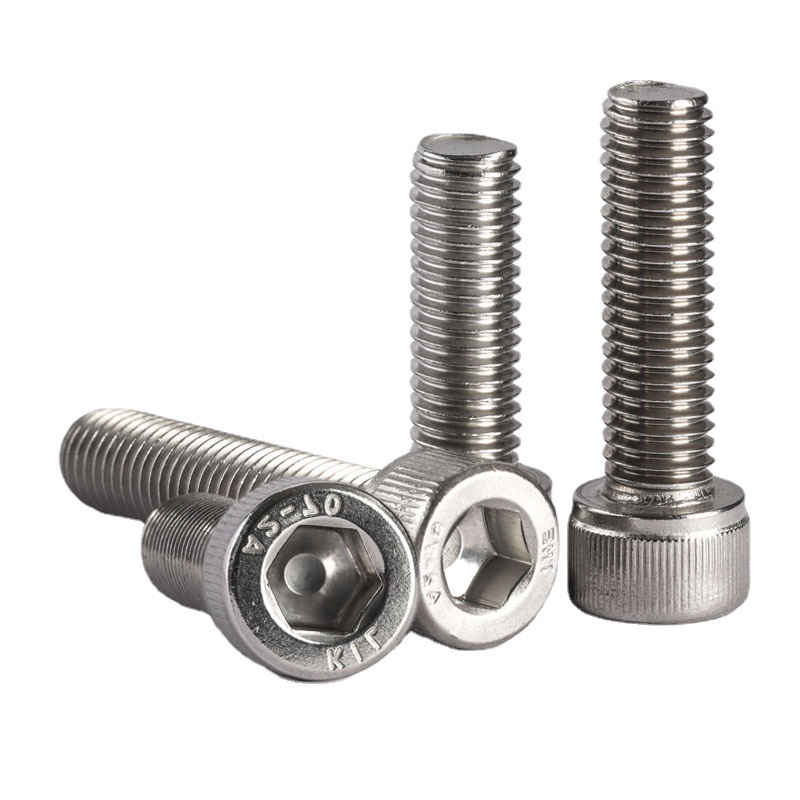
1.The Most Widely Used Socket Screw in Modern Industry:DIN912 hexagon socket head cap screw
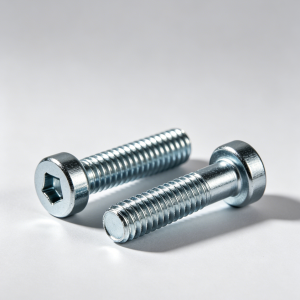
Among all precision fasteners, the DIN912 Hexagon Socket Head Cap Screw — commonly known as the hex socket screw or Allen bolt — stands as one of the most extensively employed fastening solutions across global manufacturing sectors. Featuring a cylindrical head with a recessed hexagonal drive, this screw type offers exceptional torque transmission capabilities and is ideal for applications where space constraints or aesthetic requirements demand a low-profile, flush-mount fastening solution.
This article delivers a comprehensive analysis of DIN912 stainless steel hexagon socket head cap screws, covering chemical composition, manufacturing processes, dimensional specifications, mechanical performance, application domains, international standards comparison, and the latest 2026 market outlook — offering an essential reference for engineers, procurement specialists, and international trade professionals.
2 .SUS304 Stainless Steel — The Industry Standard
SUS304 is the most widely used austenitic stainless steel grade, characterized by its balanced chromium‑nickel composition and excellent combination of mechanical properties and corrosion resistance. Its common designation “18/8 stainless steel” refers to the nominal 18% chromium and 8% nickel content. Per JIS G4303 and ASTM equivalents, the standard chemical composition is as follows:
| Element | Symbol | Content (wt%) — SUS304 |
|---|---|---|
| Carbon | C | ≤0.08 |
| Manganese | Mn | ≤2.00 |
| Silicon | Si | ≤1.00 |
| Phosphorus | P | ≤0.045 |
| Sulfur | S | ≤0.03 |
| Chromium | Cr | 17.00–19.00 |
| Nickel | Ni | 8.00–11.00 |
| Molybdenum | Mo | — |
The chromium content (17–19%) enables the formation of a stable passive chromium oxide film (Cr₂O₃) , which acts as a protective barrier against corrosive media. This film is self‑repairing in oxidizing environments, giving SUS304 its hallmark corrosion resistance in most atmospheric and mildly corrosive conditions
3. SUS316 Stainless Steel — Enhanced Corrosion Resistance
For applications demanding higher resistance to chlorides and more aggressive environments, SUS316 is the preferred material. Its key distinction lies in the addition of molybdenum (2–3%), which significantly improves resistance to pitting and crevice corrosion — particularly in marine environments or exposure to de‑icing salts. Followed by JIS G4303 specifications for SUS316:
| Element | Symbol | Content (wt%) — SUS316 |
|---|---|---|
| Carbon | C | ≤0.08 |
| Manganese | Mn | ≤2.00 |
| Silicon | Si | ≤1.00 |
| Phosphorus | P | ≤0.045 |
| Sulfur | S | ≤0.03 |
| Chromium | Cr | 16.00–18.00 |
| Nickel | Ni | 10.00–14.00 |
| Molybdenum | Mo | 2.00–3.00 |
4. Dimensional Specifications
| Thread Size | Pitch P (mm) | Wrench Size B (max/min, mm) | Socket Depth E (max/min, mm) | Head Diameter D (max/min, mm) | Head Height F (min, mm) |
|---|---|---|---|---|---|
| M3 | 0.5 | 5.68 / 5.32 | 3.00 / 2.86 | 2.58 / 2.52 | 1.3 |
| M4 | 0.7 | 7.22 / 6.78 | 4.00 / 3.82 | 3.08 / 3.02 | 2.0 |
| M5 | 0.8 | 8.72 / 8.28 | 5.00 / 4.82 | 4.095 / 4.02 | 2.5 |
| M6 | 1.0 | 10.22 / 9.78 | 6.00 / 5.70 | 5.14 / 5.02 | 3.0 |
| M8 | 1.25 | 13.27 / 12.73 | 8.00 / 7.64 | 6.14 / 6.02 | 4.0 |
| M10 | 1.5 | 16.27 / 15.73 | 10.00 / 9.64 | 8.175 / 8.025 | 5.0 |
| M12 | 1.75 | 18.27 / 17.73 | 12.00 / 11.57 | 10.175 / 10.025 | 6.0 |
| M14 | 2.0 | 21.33 / 20.67 | 14.00 / 13.57 | 12.212 / 12.032 | 7.0 |
| M16 | 2.0 | 24.33 / 23.67 | 16.00 / 15.57 | 14.217 / 14.032 | 8.0 |
| M20 | 2.5 | 30.33 / 29.67 | 20.00 / 19.48 | 17.23 / 17.05 | 10.0 |
| M24 | 3.0 | 36.30 / 35.61 | 24.00 / 23.48 | 19.275 / 19.065 | 12.0 |
| M30 | 3.5 | 45.30 / 44.61 | 30.00 / 29.48 | 22.275 / 22.065 | 15.5 |
5. Mechanical Properties of SUS304 and SUS316 (Per ASTM A276 / JIS G4303)
| Property | SUS304 (as‑annealed) | SUS316 (as‑annealed) |
|---|---|---|
| Tensile Strength (σb) | ≥520 MPa | ≥520 MPa |
| Yield Strength (0.2% offset, σ0.2) | ≥205 MPa | ≥205 MPa |
| Elongation (δ5) | ≥40% | ≥40% |
| Reduction of Area (ψ) | ≥60% | ≥60% |
| Hardness (Brinell HB) | ≤187 HB | ≤187 HB |
| Hardness (Rockwell B) | ≤90 HRB | ≤90 HRB |
| Density (at 20 °C) | 7.93 g/cm³ | 7.98 g/cm³ |
| Modulus of Elasticity (20 °C) | 193 GPa | 193 GPa |
6. Summary
The DIN912 hexagon socket head cap screw — manufactured from SUS304 or SUS316 stainless steel — represents one of the most versatile, reliable, and widely used fastening solutions in modern industry. Its cylindrical head design, recessed hex socket drive capability, and compatibility with ISO 4762 and GB70 standards make it a globally interchangeable product that serves applications ranging from automotive engines and industrial machinery to food processing equipment and medical devices.
The target specification highlights several critical quality differentiators that distinguish premium DIN912 screws from lower‑tier alternatives:
-
Authentic material sourcing (SUS304/SUS316 with genuine forged head markings)
-
Cold heading manufacturing that preserves grain flow and thread strength
-
Strict thread gauge inspection on every screw to ensure proper fit
-
Full‑thread and partial‑thread configuration options to suit diverse application needs
-
Passivation treatment for stainless steel screws and electroplating for carbon steel variants
With the global 304 stainless steel bolt market projected to reach nearly USD 740 million by 2031 at a CAGR of approximately 7.5% , DIN912 hexagon socket head cap screws will continue to play an indispensable role in world manufacturing and infrastructure development.