1. Introduction: The Low-Price, High-Risk Fastener You Thought Was Simple
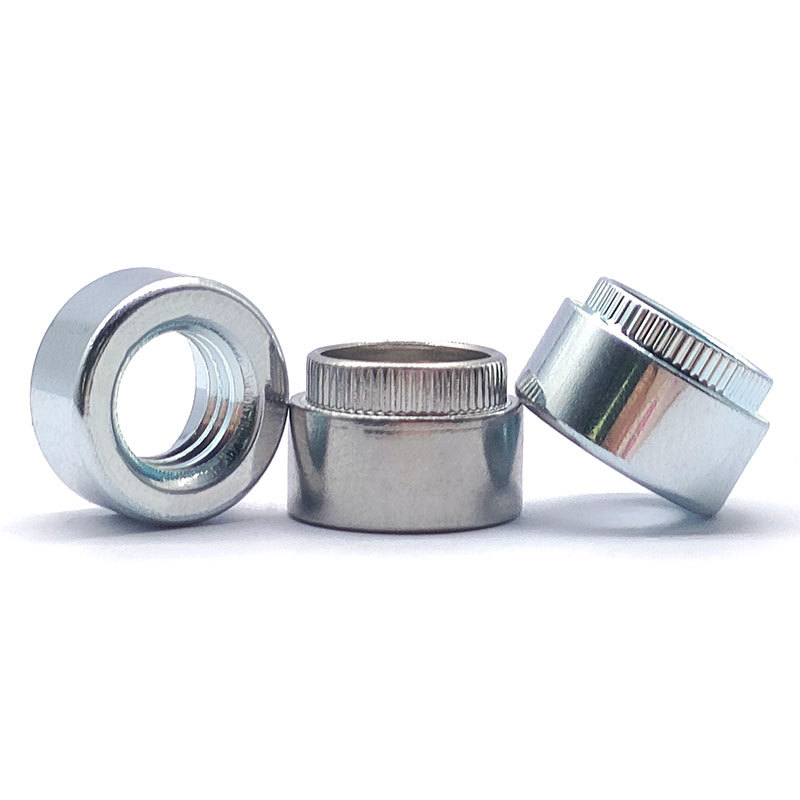
Self-clinching nuts—also called press nuts or clinch nuts—appear deceptively simple. They are small, inexpensive, and installed with a press. A buyer scanning a BOM sees a part that costs pennies and assumes the sourcing decision is equally trivial. That assumption is expensive.
In fastener procurement, the true cost of a component is rarely its unit price. It is the cost of what happens when the part does not perform. For self-clinching nuts, the failure modes are unusually punishing: a nut that does not sit flush, a thread that spins under torque, or a batch that installs perfectly on the bench but fails on the assembly line—each of these outcomes triggers rework, line stoppage, and warranty exposure far exceeding any savings captured at the quotation stage.
This guide is written from the buyer’s side of the table. It examines the most common procurement mistakes involving self-clinching nuts, analyzes real failure scenarios, and provides a structured framework for evaluating suppliers before the first purchase order is issued. The central argument is straightforward: self-clinching nut procurement is not a price exercise—it is a process-capability exercise. Buyers who understand the installation physics, the material interactions, and the traceability requirements will consistently outperform those who treat press nuts as commodity hardware.
The stakes are higher than they appear. China’s fastener exports reached approximately USD 6.17 billion in the first half of 2026, with high-strength bolts and screws (≥800 MPa) growing at 13.5% year-on-year—faster than the overall market. At the same time, the number of fastener manufacturers exceeds 10,000, but the number capable of stable, consistent supply for a specific product category is far smaller. The gap between “can make it” and “can supply it reliably” is where procurement losses accumulate.
2. The Procurement Blind Spot: Why Self-Clinching Nuts Get Under-Specified
2.1 The “Standard Part” Illusion
Most self-clinching nuts are catalog items. They have published dimensions, recommended hole sizes, and installation force ranges. This creates a dangerous illusion: because the specifications exist, the part must be interchangeable across suppliers.
The reality is different. The base hole diameter is specified with a tolerance of +0.08 / 0 mm for metric press nuts—for example, M3 requires 4.25 mm, M4 requires 5.4 mm, and M6 requires 8.75 mm. A hole that is 0.1 mm oversized may allow the nut to press in easily but will fail to develop the required torque resistance. A hole that is undersized may prevent proper clinching, leaving the nut proud of the sheet surface. These are not supplier defects—they are specification and process-control failures that originate upstream, often because the buyer never asked how the supplier controls hole compatibility with the mating sheet.
2.2 The Missing Specification Layer
Standard catalog data covers the nut. It does not cover the sheet metal it will be installed into. The two variables that most directly determine installation success are rarely specified in the purchase order:
| Variable | Why It Matters | Typical Buyer Oversight |
|---|---|---|
| Sheet hardness | Normal sheet hardness should be below HV 180; excessive hardness prevents proper clinching | Not specified in RFQ |
| Nut hardness | Nut hardness should be HRC 32 or higher throughout the section (not just surface hardness) | Assumed from supplier catalog |
| Minimum sheet thickness | Each nut size has a minimum sheet thickness requirement—e.g., M12-2 requires 6.0 mm minimum | Not verified against design |
| Hole edge condition | Sharp, flat, burr-free hole edges are required for proper clinching | Not addressed in receiving inspection |
A buyer who specifies only the nut part number—without defining the sheet conditions and installation parameters—has effectively outsourced the outcome to chance.
2.3 The 80% Installation Failure Statistic
One fastener technical source reports a stark finding: approximately 80% of reported “loose press nut” failures trace to the use of a stamping press instead of a dedicated clinching machine. This is not a nut defect. It is a process mismatch that begins with procurement: the buyer never specified the installation method, so the supplier or the contract manufacturer selected the cheapest available equipment.
This statistic should reframe how buyers think about self-clinching nut quality. The question is not “Is the nut good?” but “Is the nut good for this installation system?”
3. Failure Case Analysis: What Goes Wrong and Who Pays
Case 1: The Over-Pressured Installation — “Supplier Says the Recommendation Is Just a Reference”
The situation. A buyer sourcing a control cabinet specified a branded press nut (P*M type). During installation, the contract manufacturer used an installation force of approximately 10,300 lbs, while the manufacturer’s recommended value was 4,000 lbs—a 157% over-application. The supplier defended the practice by claiming the recommendation was “for reference only” and that torque tests on each batch had passed.
The buyer-side analysis. This case exposes a common procurement gap: the purchase order defined the nut, but not the installation window. The buyer had no contractual mechanism to enforce the recommended force, and the supplier had an economic incentive to use the fastest available press setting.
The technical consequence. Excessive installation force can deform the nut, damage the sheet, or create residual stresses that reduce torque resistance—even if a post-installation torque test passes on a sample. The torque test verifies the result under one condition; it does not prove the process is stable across the production run.
What the buyer should have done. Specify the installation force range in the purchase order, require documentation of the press setting for each production lot, and include a first-article installation verification on the buyer’s own sheet material before mass production.
Case 2: The Proud Nut — “We Use the Right Machine, But It Won‘t Sit Flat”
The situation. A buyer reported that S-M10-2B press nuts installed in 3 mm carbon steel would not sit flush, and the nuts loosened when torque was increased. The buyer confirmed a 34 kN press force and a dedicated clinching machine—ruling out the most common cause.
The buyer-side analysis. The troubleshooting sequence pointed to four candidate causes, in order of probability:
-
Nut hardness below HRC 32 (section hardness, not surface)
-
Sheet hardness above HV 180-1
-
Knurling geometry not sharp or not properly formed—the serrations that bite into the sheet must be crisp and free of “necking”
-
Hole diameter or edge condition—including whether the press was acting on the sheet rather than the nut
The procurement lesson. The buyer had specified the nut part number but had not verified the incoming hardness of either the nut or the sheet. A receiving inspection plan that includes hardness verification on both components would have caught the mismatch before the production run. For a buyer, the takeaway is that “dimensional compliance” is not the same as “installation compliance.” A nut that passes a thread gauge can still fail to clinch if its hardness is out of specification.
Case 3: The Sample-to-Production Gap — CNC Sample, Cold-Headed Production
While documented specifically for non-standard fasteners, this pattern applies directly to self-clinching nuts when buyers accept samples produced by machining rather than by the production process. As industry analysis notes: “Samples合格 does not equal mass production qualified”—the sample stage may use CNC turning for speed, while production switches to cold heading, changing the dimensional distribution, surface condition, and internal grain flow. For self-clinching nuts, the knurling geometry that creates the clinching interference is particularly sensitive to process route. A CNC-machined sample can have perfectly sharp knurling; a cold-headed production part may have slightly rounded serrations that reduce pull-out resistance.
Buyer action. Require that first-article samples be produced using the same process route as mass production, and explicitly prohibit process substitution without written deviation approval.
4. Supplier Evaluation: What to Verify Before the First Order
4.1 The Five-Dimension Framework for Self-Clinching Nut Suppliers
A structured evaluation framework—adapted from established fastener supplier assessment models—allows buyers to distinguish “can make” from “can supply consistently”.
| Dimension | What to Verify | Red Flags |
|---|---|---|
| 1. Material traceability | Heat-number-to-finished-batch linkage; EN 10204 3.1 certificate per lot | Certificate copies without traceable numbers; multiple heats mixed in one finished batch |
| 2. Heat treatment control | Furnace temperature curves; hardness sampling frequency; tempering records for high-strength variants | Hardness reported as “typical” rather than per-batch |
| 3. Surface treatment | Coating thickness, salt spray reports, de-embrittlement records for class 10.9 and above | Hydrogen embrittlement, decarburization, and coating adhesion are the three highest-frequency defects at this stage |
| 4. Installation compatibility | Willingness to provide recommended force ranges, hole size tolerances, and sheet condition requirements | “The catalog covers it” — refusal to engage on application specifics |
| 5. Batch consistency evidence | First-article inspection per lot; torque and pull-out test data; process capability (Cpk) for critical dimensions | Only final inspection; no in-process data |
4.2 The Questions That Separate Real Capability from Catalog Claims
A buyer evaluating a self-clinching nut supplier should ask questions that require process knowledge, not catalog recitation:
-
“What is the section hardness of your nut, and how do you verify it is HRC 32 or above throughout—not just at the surface?” This question tests whether the supplier understands the difference between surface hardness and through-hardness, a distinction that directly determines clinching performance.
-
“What is the acceptable sheet hardness range for your product, and do you provide a written installation specification including hole tolerance?” A supplier who cannot answer this is selling a part, not a fastening solution.
-
“Can you provide the installation force window for each nut size, and do you audit customers or contract manufacturers who exceed it?” The over-pressure case study above illustrates why this matters.
-
“For class 10.9 and above, can you provide de-embrittlement records for each plating lot?” Hydrogen embrittlement is a delayed failure mode—it will not appear in incoming dimensional inspection.
-
“Can you perform a reverse-traceability drill—taking a finished nut from stock and identifying its heat number, heat treatment batch, and plating lot?” This is more revealing than a stack of certificates.
4.3 The “Same Grade Substitution” Trap
A recurring supplier behavior that damages buyers is material substitution without change approval. A supplier may substitute one cold-heading steel grade for another because the mechanical property table “looks equivalent.” Industry analysis notes that SCM435 and 10B33 can both meet the ISO 898-1 property requirements for class 10.9, but differences in cold-heading plasticity, hardenability, and tempering stability manifest as head cracking rates and thread gauge rejection rates.
For self-clinching nuts, the material’s cold-forming behavior directly affects the knurling geometry and the dimensional consistency of the clinching feature. A substitution that “meets the grade” can still fail to clinch. Buyers should require written deviation approval for any material change, supported by process validation data, and should verify the change in both sample and production stages.
5. Common Buyer Questions and Practical Solutions
Q1: “How do I know which hole size to specify for my sheet?”
Answer. Use the supplier’s published base-hole table as the starting point, not the final answer. For metric press nuts, the tolerance is +0.08 / 0 mm—for example, M3 = 4.25 mm, M4 = 5.4 mm, M6 = 8.75 mm. But the critical buyer action is to verify hole size on the actual production sheet, not on a test coupon, and to include hole diameter in the first-article inspection report.
Q2: “The supplier’s nut passed the torque test, but it still spins in production. Why?”
Answer. A torque test on a sample verifies the result under one set of conditions. It does not prove the installation process is stable. The most common causes of spinning under torque are: nut hardness below HRC 32, sheet hardness above HV 180, inadequate clinching force, or hole diameter out of tolerance. The buyer should require the supplier to document the installation force window and verify section hardness on incoming lots.
Q3: “Is a cheaper press nut from a trading company acceptable if the sample passes?”
Answer. A passing sample from a trading company proves that someone can make the part. It does not prove that the trading company’s supply chain can repeat it. The buyer should trace the actual manufacturing location and confirm that the production process—including heat treatment and surface treatment—is under the same quality system as the sample. The 13.5% growth in high-strength fastener exports reflects a market shift toward performance-verified products, not toward lower-cost intermediaries.
Q4: “How do I protect against hydrogen embrittlement in plated press nuts?”
Answer. For property class 10.9 and above, electroplated nuts require post-plating baking and documented de-embrittlement records. Hydrogen embrittlement is a delayed failure—it can occur hours or days after installation, under loads below the specified strength. The purchase order should explicitly require baking records for each plating lot, referencing ISO 4042 or the applicable standard.
Q5: “What is the single most effective change I can make to my self-clinching nut procurement?”
Answer. Add an installation specification to the purchase order. Most buyers specify the nut and nothing else. A specification that defines the sheet hardness range, hole tolerance, installation force window, and required first-article installation verification on the buyer’s material transforms the purchase from a part order into a process agreement. The 80% failure rate associated with stamping-press installation is preventable—but only if the buyer defines the installation method as part of the procurement requirement.
6. Summary: Buy the Process, Not the Part
Self-clinching nuts occupy a category that procurement teams consistently under-manage: low unit price, high consequence of failure, and a false sense of simplicity created by catalog availability. The analysis in this guide leads to a clear conclusion:
The buyer’s job is not to purchase a nut. It is to purchase a repeatable installation outcome.
The evidence supports three actionable priorities:
| Priority | Action | Expected Impact |
|---|---|---|
| 1. Specify installation conditions | Define sheet hardness, hole tolerance, and force window in the PO | Prevents the 80% failure mode associated with uncontrolled pressing |
| 2. Verify section hardness and traceability | Require per-lot hardness data and reverse-traceability drills | Catches the “proud nut” and “spinning nut” failures before production |
| 3. Treat material substitution as a change | Require written deviation approval and process validation for any material change | Prevents grade-equivalent substitutions that fail in cold forming |
The fastener market is moving toward performance verification. High-strength, traceable, and batch-consistent fasteners are no longer a premium option—they are an increasingly standard procurement expectation, with 800 MPa+ bolt exports growing at 13.5% while average export tonnage grew only 2.3%. Buyers who continue to treat self-clinching nuts as a price-driven commodity will absorb the cost of that gap on their production lines. Buyers who evaluate process capability, traceability, and installation compatibility will capture the savings that the low-price approach promises but rarely delivers.