How is the lock nut locked?

Do you know the difference between a lock nut and a common nut? Ordinary nuts in use may be easy to loosen due to vibration and other reasons, in some relatively high requirements of the equipment is not up to the use of standards. Lock nuts are often used in these special occasions. Lock nuts will not loosen themselves unless they are broken after tightening. Do you know the difference between a lock nut and a common nut? Ordinary nuts in use may be easy to loosen due to vibration and other reasons, in some relatively high requirements of the equipment is not up to the use of standards. Lock nuts are often used in these special occasions. Lock nuts will not loosen themselves unless they are broken after tightening.

Locking nut locking principle:

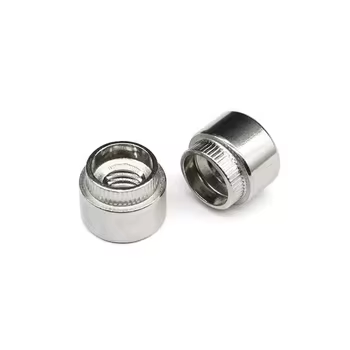
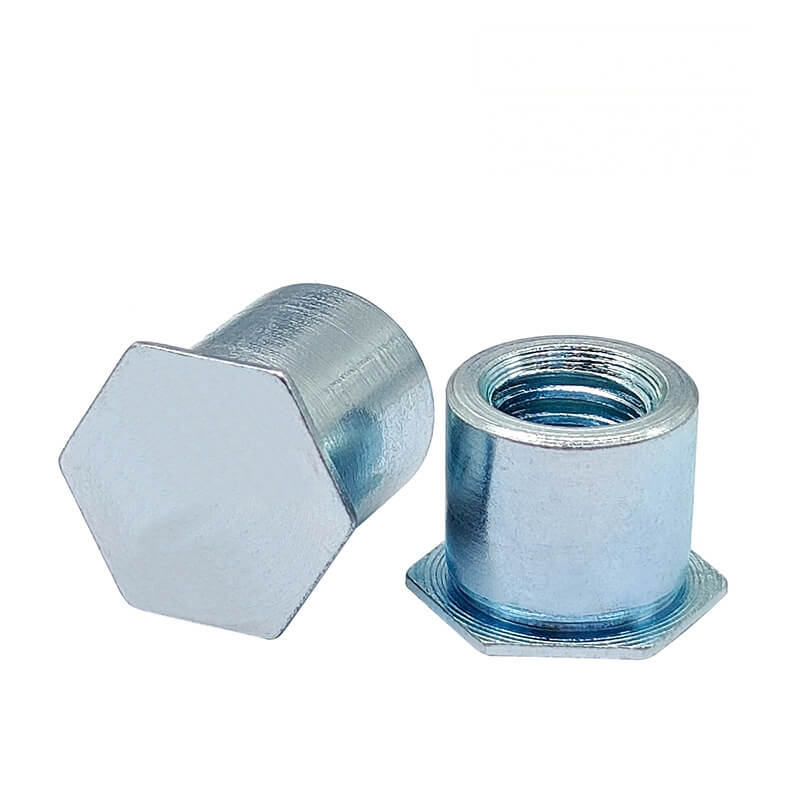
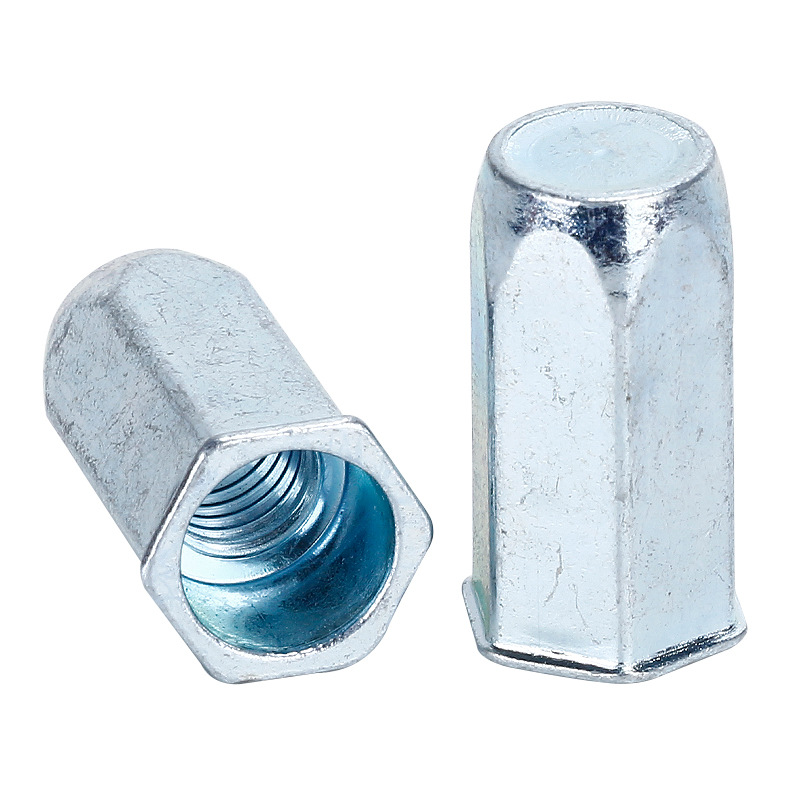
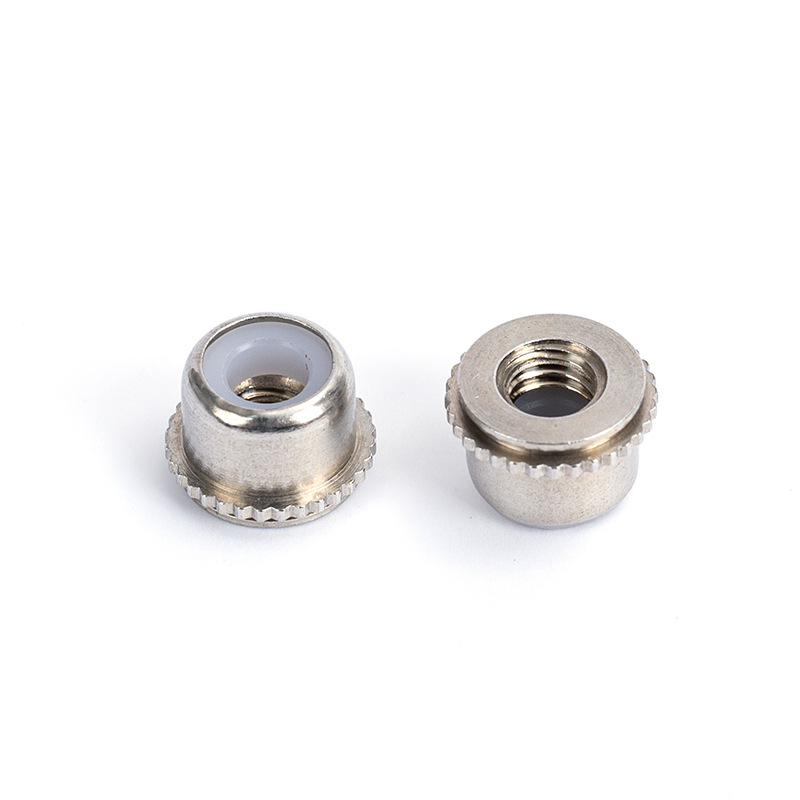
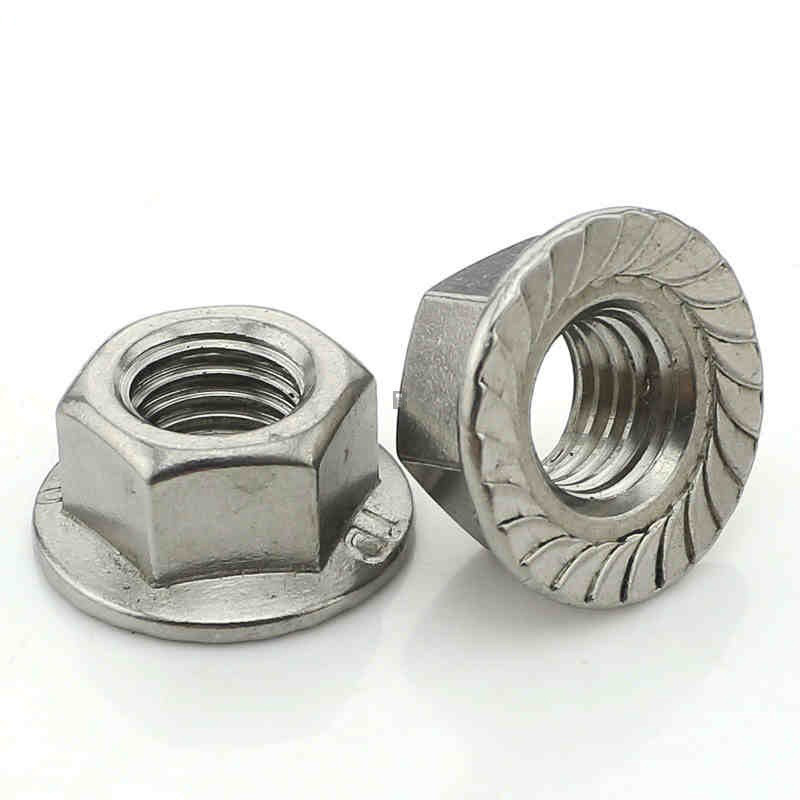
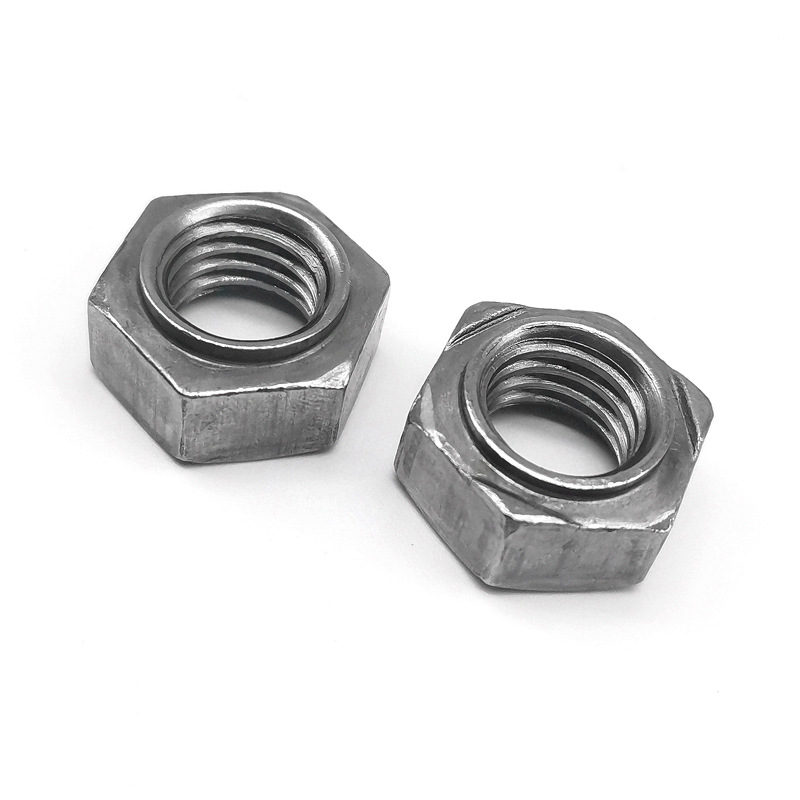
The working principle of the nut is to use the friction between the nut and the bolt to self-lock. However, the reliability of this self-locking will be reduced in dynamic loads. In some important occasions, we will take some anti-loosening measures to ensure the reliability of nut locking. The locking nut is one of the anti-loosening measures. Lock nut is generally by friction, its principle is to press into the preset hole of the sheet metal through the emboying tooth, the general square preset hole aperture is slightly smaller than the pressure riveting nut. The nut is connected with the locking mechanism. When the nut is tightened, the locking mechanism locks the ruler body, and the ruler frame cannot move freely to achieve the purpose of locking; When loosening the nut, the locking mechanism is off the ruler body, and the ruler frame moves along the ruler body.

There are several types of locking nuts:

1.High strength self-locking nut: A classification of self-locking nuts with high strength and reliability.

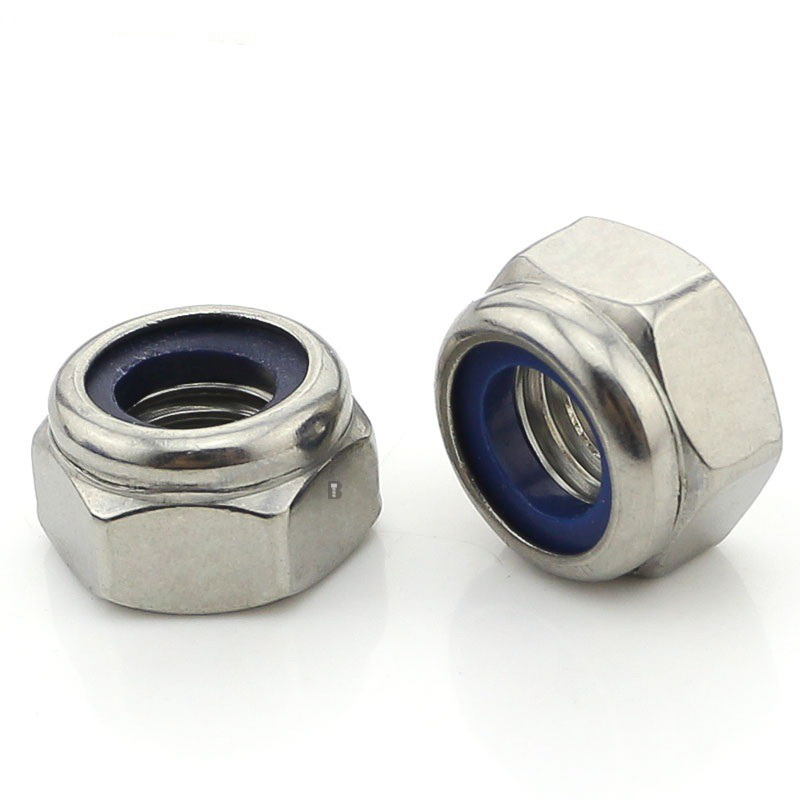
2.Nylon self-locking nut: Nylon self-locking nut is a new type of high anti-vibration and anti-tightening parts.

3.Swimming self-locking nut: double-ear sealing swimming self-locking nut is composed of sealing cover, self-locking nut, pressure ring and sealing ring.

4.Spring self-locking nut: Spring clamp self-locking nut, which is composed of S-shaped spring clamp and self-locking nut.
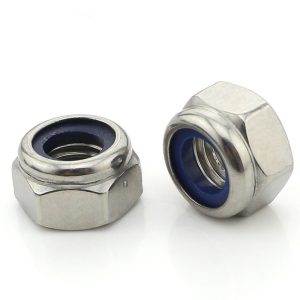
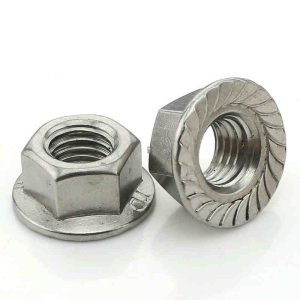
Nylon insert nutsstainless steel Flange locknuts


Picture of Dongguan Aotuo

Dongguan Aotuo

Get In Touch
Welcome To Share This Page:
Product Categories
Latest News
Get A Free Quote Now !
Contact Form Demo (#3)

Related Products

Related News

1. Introduction: Understanding Breaking Torque in Fasteners In the fastener industry, breaking torque (also known as failure torque or torsional strength) is one of the most critical mechanical properties that

Introduction In industrial control cabinets, server racks, telecommunications equipment, instrument housings and electronic panel assemblies, engineers frequently need fasteners that enable repeated, tool‑free or screwdriver‑operated

Introduction In modern sheet‑metal chassis manufacturing, control‑panel assembly, electronic‑enclosure production and cabinet fabrication, mechanical engineers are frequently tasked with creating precise, fixed spacing gaps between

1. Introduction: A Puzzling Phenomenon One of the most frequently encountered—and most misunderstood—phenomena in the fastener industry is the magnetism exhibited by stainless steel fasteners. Procurement

Introduction In mechanical assembly, outdoor signage installation, furniture manufacturing, railing construction and architectural decoration, designers often face two competing priorities: reliable threaded fastening and clean,

Introduction In modern sheet‑metal fabrication, outdoor signage hardware, transportation equipment and general machinery assembly, engineers constantly face a critical trade‑off: selecting fasteners that deliver long‑lasting

Fastener Tolerance Standard (Bolts, Screws, Studs & Nuts) In global mechanical manufacturing, consistent dimensional accuracy of bolts, screws, studs and nuts directly determines assembly smoothness,

Fastener Plating Thickness 和 GB/T5267.1-2002 In the high-stakes world of global manufacturing, a fastener is never “just a screw.” As we move through 2026, industries

1. Introduction: The Hidden Danger in Plated Fasteners Hydrogen embrittlement is one of the most serious and frequently misunderstood failure mechanisms in the fastener industry.

Get A Free Quote Now!

If have any requests, please feel free to contact us, we will be eager to serve you.

Scroll to Top

Get A Free Quote Now !

Contact Form Demo (#3)