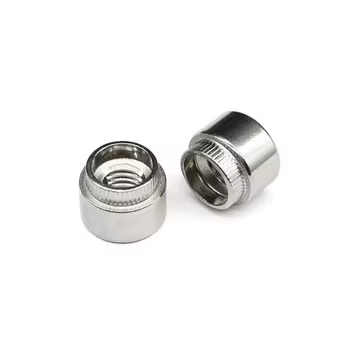
What are blind threaded standoff?

Table of Contents

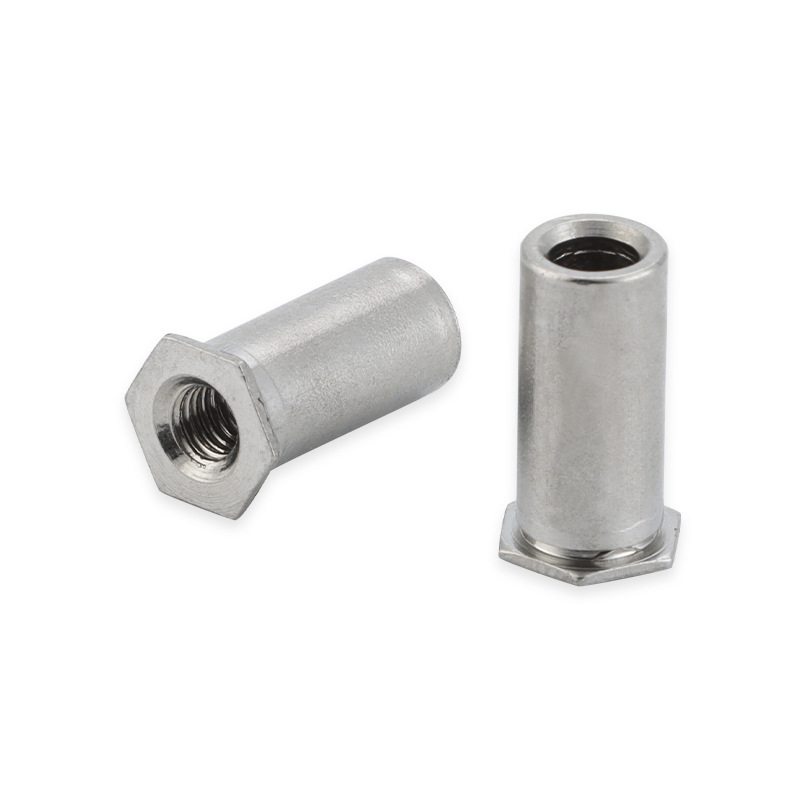
stainless steel blind threaded standoffs

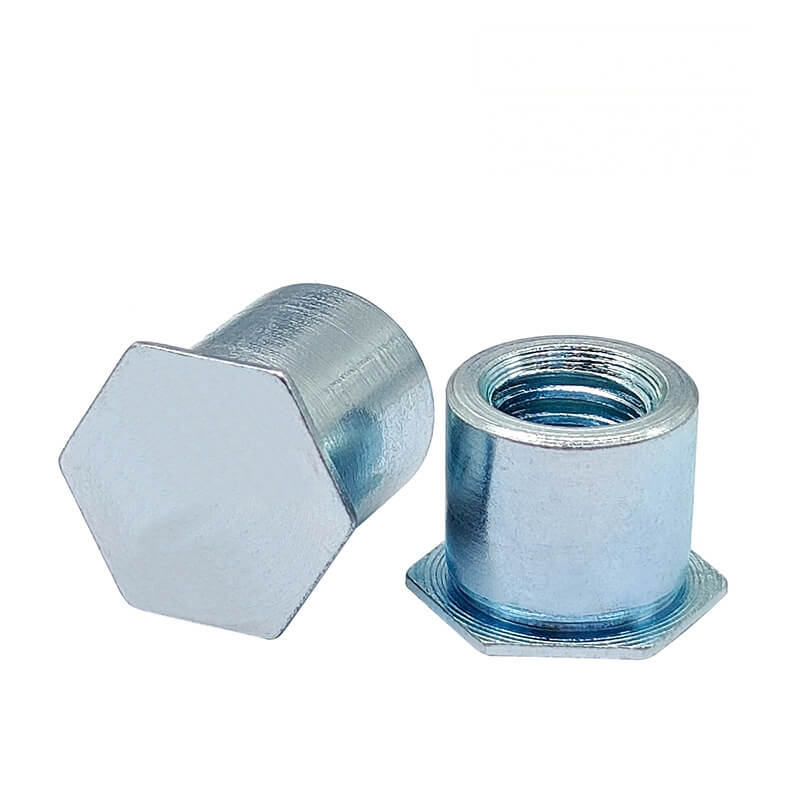
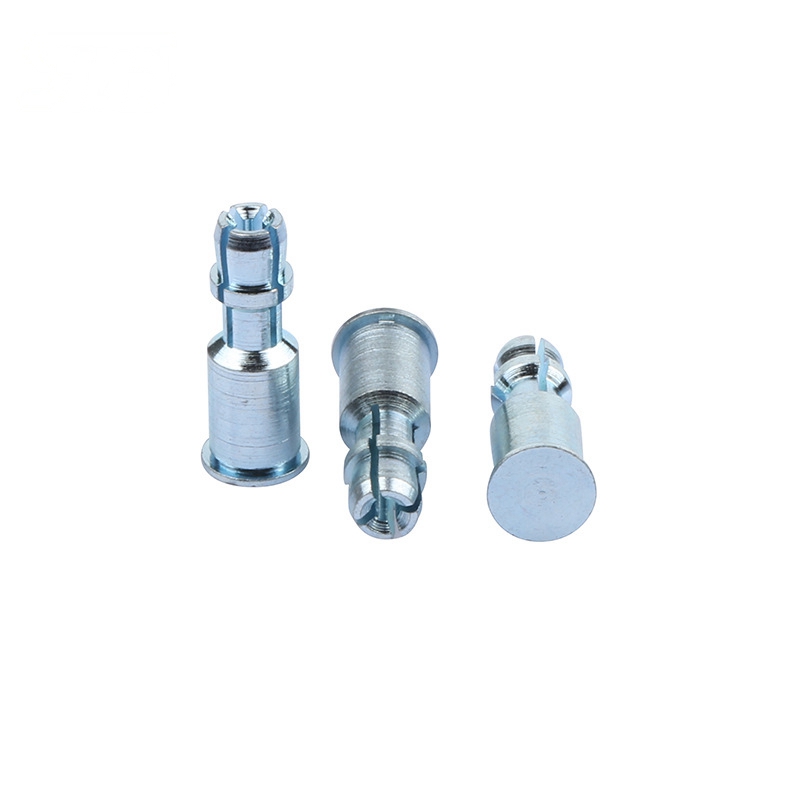
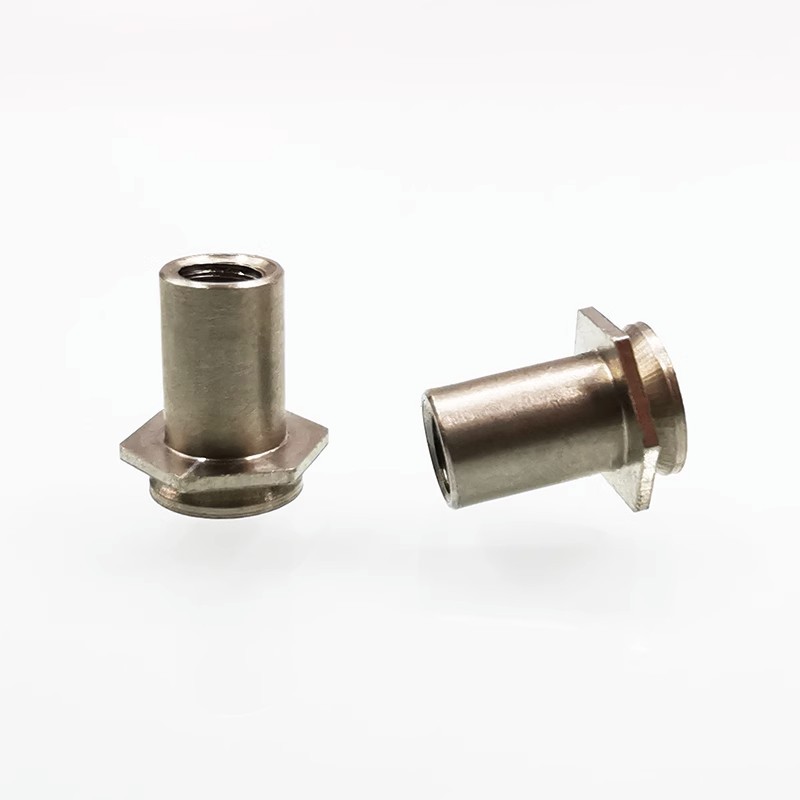
Self-clinching nut standoffs, also known as self-clinching studs or nut standoffs, are divided into through-hole nut standoffs (SO) and blind-hole nut standoffs (BSO). They are a type of fastener used in sheet metal, thin plates, chassis, and cabinets. The self-clinching nut standoff has a hexagonal shape at one end and a cylindrical shape at the other end. There is a back-cut groove between the hexagonal side and the cylindrical shape, and its inner shape is an internal thread. The hexagonal head is pressed into the preset hole of the thin plate by a press (the aperture of the preset hole is generally slightly larger than the cylindrical outer diameter of the self-clinching stud), causing plastic deformation around the hole. The deformed part is squeezed into the back-cut groove of the self-clinching nut standoff, so that the self-clinching nut standoff is riveted to the thin plate, thereby forming an effectively fixed internal thread on the thin plate.

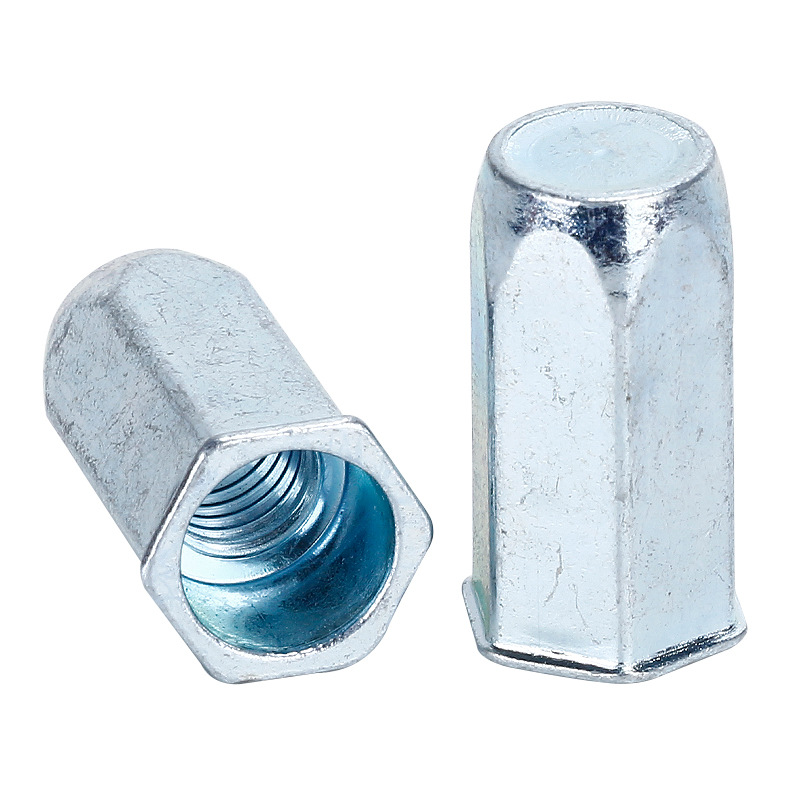
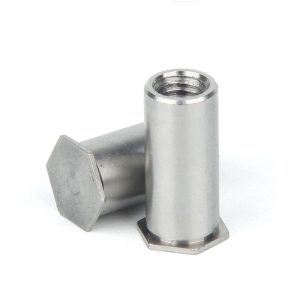
What is a blind threaded standoff? As the name suggests, it refers to whether the hole in the stud is connected. If it is not connected, it is called a blind threaded standoffs, and if it is connected, it is a through hole thread standoffs.
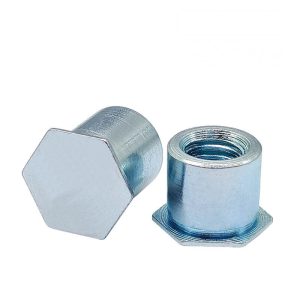
zinc plating blind threaded standoffs

So when should blind hole self-clinching studs be used? This mainly depends on how the customer uses it, and is determined by the performance and requirements of the product accessories. Based on years of industry experience, if the stud is too long, it is generally difficult to pass through the hole and it is not easy to produce. Therefore, blind hole self-clinching studs are more commonly used for longer studs.

Materials of standoffs: carbon steel, stainless steel, and stainless iron.
Model of blind hole pressure riveting studs: BSO BSOS BSOA
Specifications of pressure riveting studs: M2-M6.
Length of pressure riveting studs: 3mm-40mm.

Picture of Dongguan Aotuo

Dongguan Aotuo

Get In Touch
Welcome To Share This Page:
Product Categories
Latest News
Get A Free Quote Now !
Contact Form Demo (#3)

Related Products

Related News

Fastener Tolerance Standard (Bolts, Screws, Studs & Nuts) In global mechanical manufacturing, consistent dimensional accuracy of bolts, screws, studs and nuts directly determines assembly smoothness,

Fastener Plating Thickness 和 GB/T5267.1-2002 In the high-stakes world of global manufacturing, a fastener is never “just a screw.” As we move through 2026, industries

1. Introduction: The Hidden Danger in Plated Fasteners Hydrogen embrittlement is one of the most serious and frequently misunderstood failure mechanisms in the fastener industry.

EElectro galvanizing—also known as zinc electroplating—is one of the most widely adopted surface finishing technologies.This article provides a professional, in-depth analysis of the complete electro

1. Overview of the Zinc Electroplating Process The complete zinc plating process can be divided into three main stages–: Pre-treatment — Removing rust, scale, grease, and

1. Introduction: The Mystery of Black Spots in Salt Spray Testing In the fastener industry, Neutral Salt Spray (NSS) testing is the universal benchmark for verifying the

Part 1: Measurement Systems in Fastener Industry In the global fastener industry, two primary measurement systems are widely used: the Metric system and the Imperial

1.The Most Widely Used Socket Screw in Modern Industry:DIN912 hexagon socket head cap screw Among all precision fasteners, the DIN912 Hexagon Socket Head Cap Screw — commonly

Introduction: Why SUS304 Remains the Most Widely Used Stainless Steel SUS304 stainless steel Among all stainless steel grades as the undisputed industry leader. Often synonymously

Get A Free Quote Now!

If have any requests, please feel free to contact us, we will be eager to serve you.

Scroll to Top

Get A Free Quote Now !

Contact Form Demo (#3)