Working principle and installation method of waterproof nuts

stainless steel blind nuts

What is a waterproof nut?

Waterproof nuts are a small branch of fasteners and have good sealing and waterproof properties.

How does the waterproof nut work?

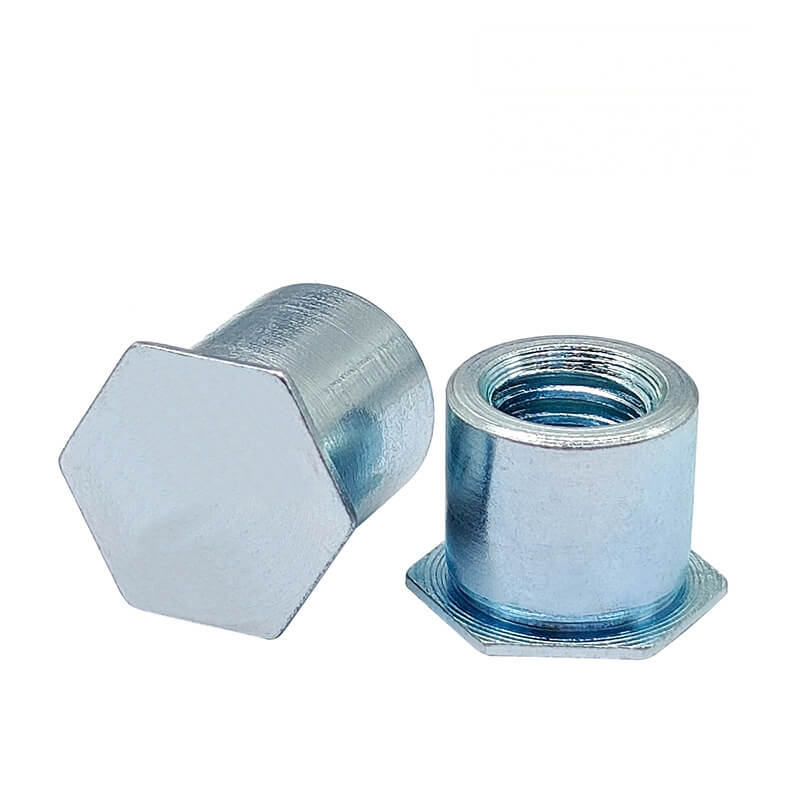
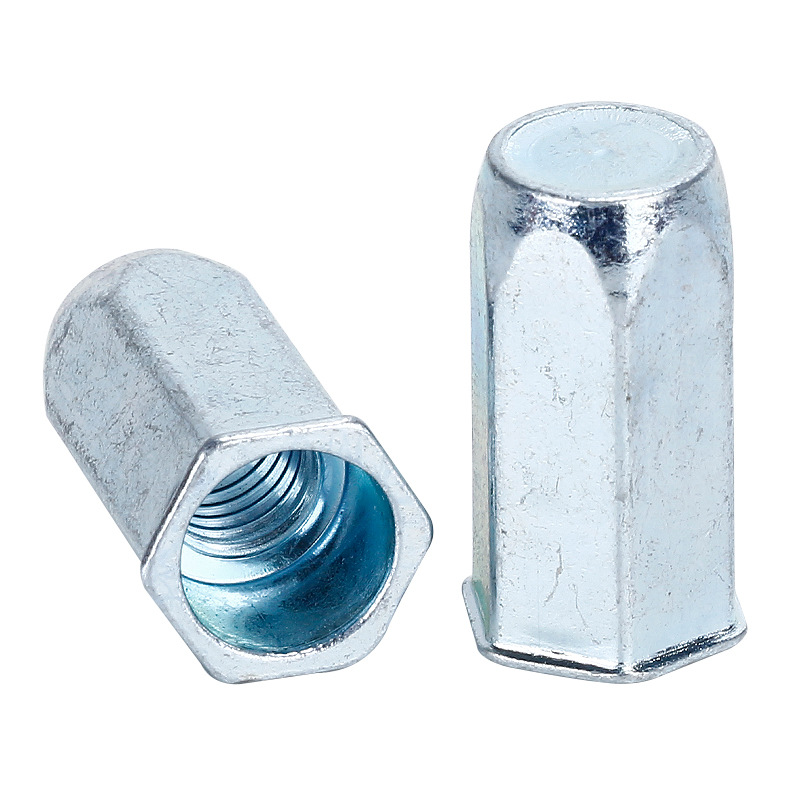
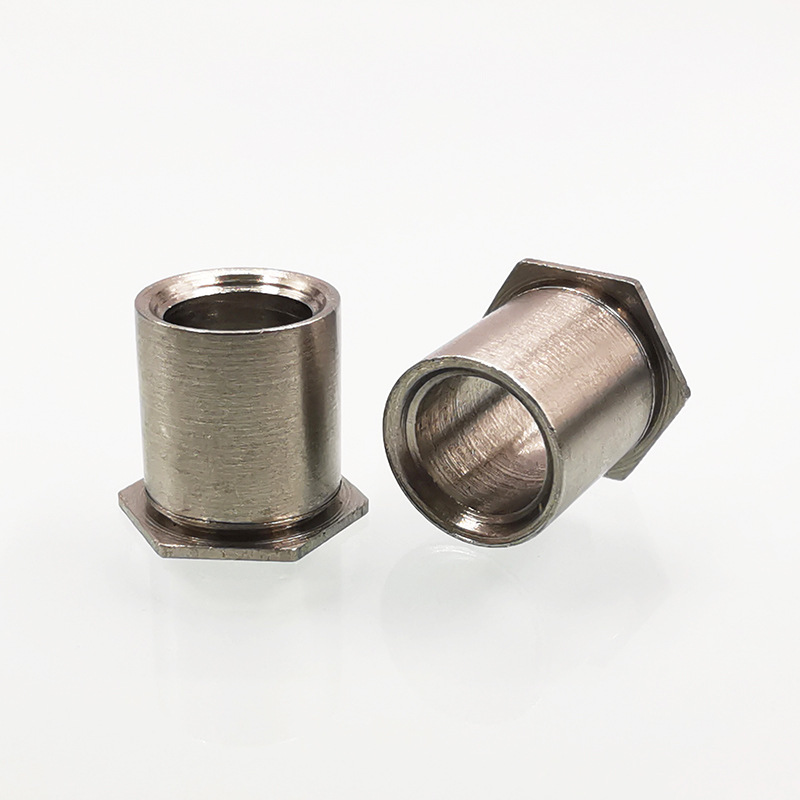
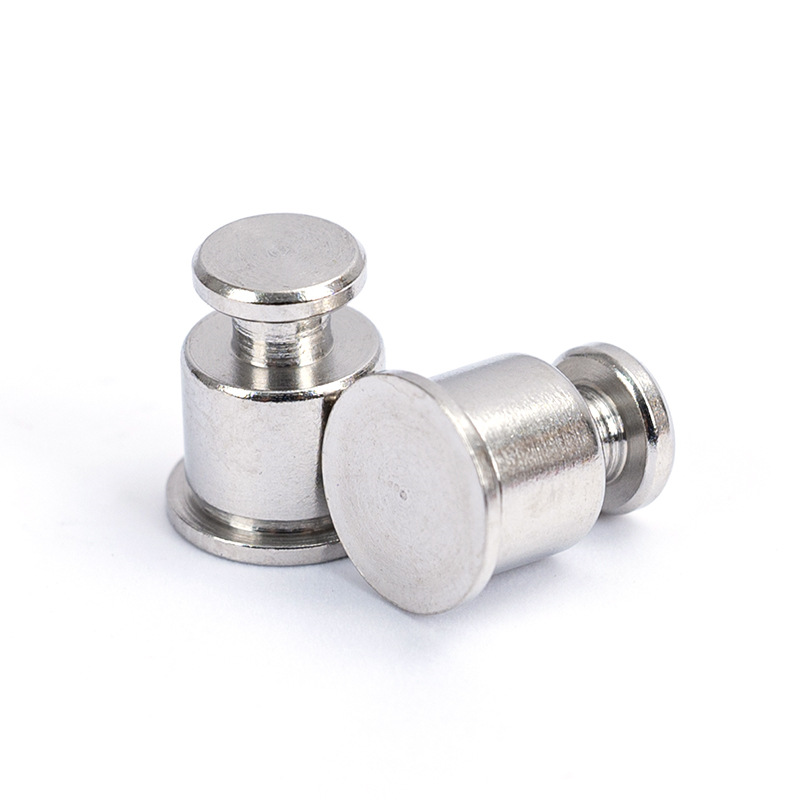
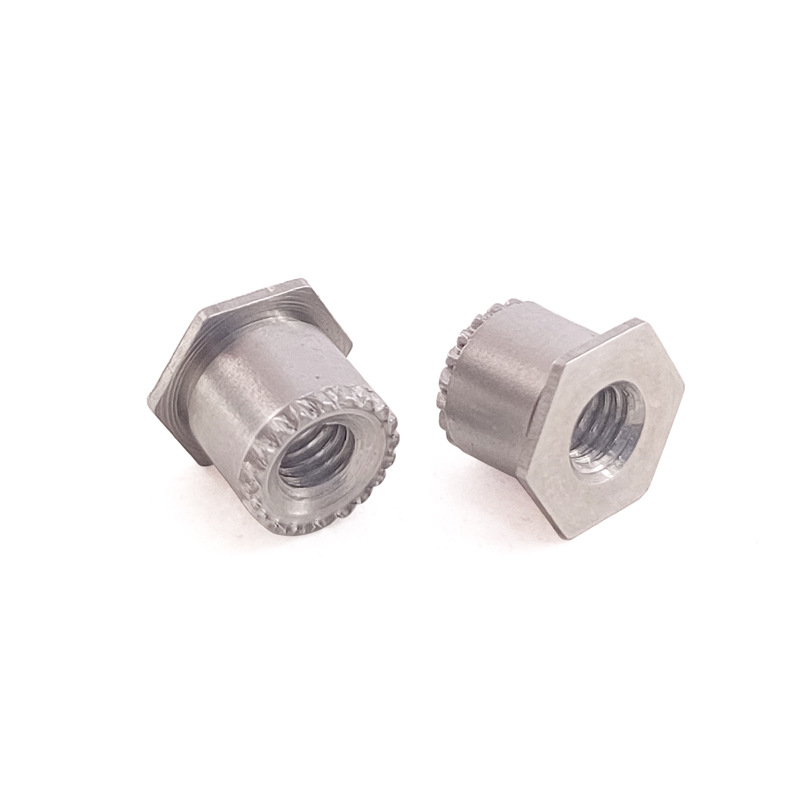
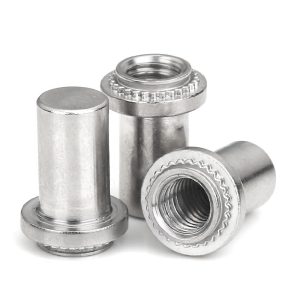
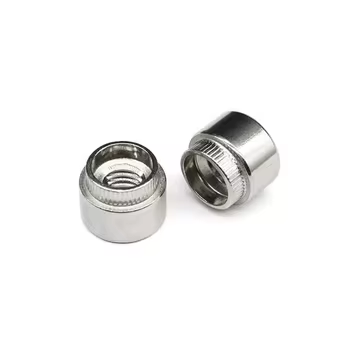
The waterproof nut is used to solve the problem in the prior art that water droplets enter the interior of the product through the connection between the nut and the screw, causing the nut to fall off easily. The waterproof nut has an internal thread of a blind hole, and the head end is equivalent to an S-shaped self-clinching nut, which is riveted to the board to form an effective internal nut. Even if water droplets enter from the connection between the screw and the nut, they will only fall into the blind hole and cannot enter the interior of the product, thus achieving the waterproof function.

What are the characteristics and application range of waterproof nuts?

Waterproof nuts are made of high-quality 304 stainless steel, with reliable quality and long-lasting rust resistance. The nut threads are clear and deep, with even force to avoid stripping. The waterproof nut has a neat overall cut surface, long-lasting fastening, and is strong and durable. It is widely used in: information communication, automation and control, electricity, transportation, medical, electronic appliances, aerospace, new energy industries, etc.

What is the installation method of waterproof nuts?

During the installation of waterproof nuts, special riveting equipment must be used for operation. During installation, the riveting machine and the head of the waterproof nut should be kept vertically balanced and pressed down evenly. When selecting waterproof nuts, the size range must be determined according to the thickness of the plate used. Waterproof nuts can be divided into B type and BS type. The material of B type is carbon steel, and the surface treatment is blue-white zinc by default; the material of BS type is stainless steel, and the surface treatment is stainless steel passivation by default. It is widely used in rust-proof work places and plays a role in sealing and waterproofing. In addition, the hardness of low-carbon steel plates must be less than 70RB, and the hardness of stainless steel plates must be less than 80RB.

Picture of Dongguan Aotuo

Dongguan Aotuo

Get In Touch
Welcome To Share This Page:
Product Categories
Latest News
Get A Free Quote Now !
Contact Form Demo (#3)

Related Products

Related News

1. Introduction: Understanding Breaking Torque in Fasteners In the fastener industry, breaking torque (also known as failure torque or torsional strength) is one of the most critical mechanical properties that

Introduction In industrial control cabinets, server racks, telecommunications equipment, instrument housings and electronic panel assemblies, engineers frequently need fasteners that enable repeated, tool‑free or screwdriver‑operated

Introduction In modern sheet‑metal chassis manufacturing, control‑panel assembly, electronic‑enclosure production and cabinet fabrication, mechanical engineers are frequently tasked with creating precise, fixed spacing gaps between

1. Introduction: A Puzzling Phenomenon One of the most frequently encountered—and most misunderstood—phenomena in the fastener industry is the magnetism exhibited by stainless steel fasteners. Procurement

Introduction In mechanical assembly, outdoor signage installation, furniture manufacturing, railing construction and architectural decoration, designers often face two competing priorities: reliable threaded fastening and clean,

Introduction In modern sheet‑metal fabrication, outdoor signage hardware, transportation equipment and general machinery assembly, engineers constantly face a critical trade‑off: selecting fasteners that deliver long‑lasting

Fastener Tolerance Standard (Bolts, Screws, Studs & Nuts) In global mechanical manufacturing, consistent dimensional accuracy of bolts, screws, studs and nuts directly determines assembly smoothness,

Fastener Plating Thickness 和 GB/T5267.1-2002 In the high-stakes world of global manufacturing, a fastener is never “just a screw.” As we move through 2026, industries

1. Introduction: The Hidden Danger in Plated Fasteners Hydrogen embrittlement is one of the most serious and frequently misunderstood failure mechanisms in the fastener industry.

Get A Free Quote Now!

If have any requests, please feel free to contact us, we will be eager to serve you.

Scroll to Top

Get A Free Quote Now !

Contact Form Demo (#3)